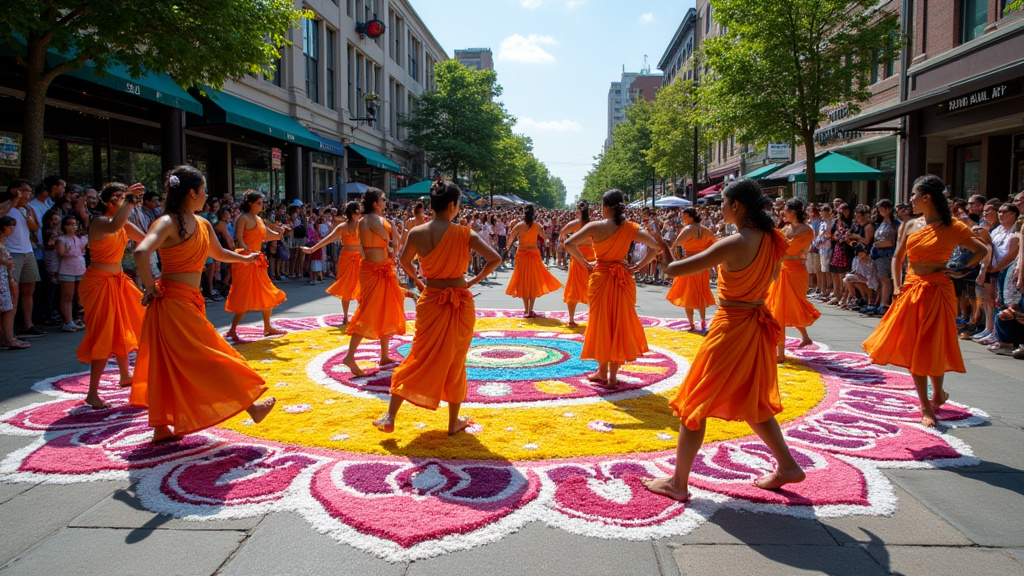
On August 1st, 2026, the heart of downtown London shifted its rhythm as the Utsavam Onam Carnival took over Dundas Place. Transforming the city’s central thoroughfare into a colorful tapestry of South Indian heritage, the event celebrated Onam—the traditional harvest festival of Kerala—with an immersive showcase of dance, fashion, and culinary art. The festival drew residents and curious onlookers alike, turning the urban landscape into a vibrant hub of community connection and multicultural exchange.
Key Highlights
- Cultural Immersion: The event featured traditional attire showcases, including the iconic Kasavu sarees and Mundus, highlighting the aesthetic elegance of South Indian heritage.
- Location Impact: Hosted on Dundas Place, the festival utilized the ‘flex-street’ infrastructure to create a pedestrian-first environment, allowing for large-scale cultural displays.
- Community Unity: The carnival served as a platform for the local diaspora to celebrate Malayalam traditions while introducing the broader London community to the significance of the harvest festival.
Honoring Heritage on Dundas Place: A Cultural Milestone
The Utsavam Onam Carnival is more than just a gathering; it represents a significant milestone in the evolving multicultural narrative of London, Ontario. By bringing the ancient traditions of Kerala—a state located on the tropical Malabar Coast of India—to the forefront of a major Canadian city, the organizers have successfully bridged geographic and cultural divides. The festival, which celebrates the homecoming of the mythical King Mahabali, is deeply rooted in themes of equality, prosperity, and harvest. Seeing these traditions enacted in the middle of a Canadian downtown core highlights the dynamic nature of contemporary urban life.
The Art and Tradition of Onam
At the core of the carnival were the vibrant displays of Pookalam—intricate flower carpets designed with petals and leaves—which are central to Onam festivities. These floral arrangements were strategically placed along the walkways of Dundas Place, offering a visual contrast against the concrete urban architecture. Beyond the aesthetics, the festival organizers emphasized the ‘Sadhya,’ a traditional feast served on banana leaves, although the carnival focused primarily on the cultural performance and dress aspects to engage the public. Attendees were treated to demonstrations of the Thiruvathirakali dance, a graceful, circular performance that requires high levels of coordination and community spirit. The presence of these art forms in a public space like Dundas Place encourages a deeper understanding of South Indian history and its continued relevance in the global diaspora.
Economic and Social Revitalization of Downtown London
The decision to host the event on Dundas Place is strategic and indicative of a wider trend in urban planning: the ‘flex-street’ concept. By temporarily closing the street to vehicular traffic, the city allows for a pedestrian-centric experience that fosters spontaneous engagement. For downtown London, this is a vital economic driver. Multicultural festivals of this scale bring foot traffic to the core, benefiting local retailers, restaurants, and cafes that line the thoroughfare. Moreover, these events improve the ‘social infrastructure’ of the city. When residents from diverse backgrounds share a space for celebration, it reduces social isolation and promotes inclusivity. The success of the August 1st, 2026, carnival provides a strong case for the city to continue prioritizing such cultural programming to maintain the vitality of the downtown area.
Future Outlook: Building a Multicultural Mosaic
Looking forward, the success of the Utsavam Onam Carnival sets a high bar for cultural programming in Southwestern Ontario. As the population of South Indian Canadians continues to grow in the region, there is an increasing demand for authentic, community-led events that reflect this demographic shift. Analysts suggest that future iterations of the festival could expand to include more interactive workshops, language stalls, and collaborations with local academic institutions to provide historical context for the festivities. The ability to integrate such events into the city’s annual calendar suggests that London is successfully transitioning into a more cosmopolitan hub. The 2026 carnival was not merely an event, but a blueprint for how cities can leverage cultural celebration to enhance the public experience and foster long-term community growth.
FAQ: People Also Ask
Q: What is the significance of the Utsavam Onam Carnival?
A: It is a celebration of the Malayalam harvest festival of Onam, which marks the homecoming of King Mahabali. It serves to preserve South Indian culture, foster community unity, and promote cultural exchange within the London diaspora.
Q: Why was Dundas Place chosen for this festival?
A: Dundas Place is designed as a ‘flex-street’ that can accommodate large pedestrian crowds and various programming needs, making it the ideal venue for a large-scale, public-facing cultural event that requires open space for performances and displays.
Q: Are there plans for the festival to return in 2027?
A: While specific dates for future years are usually determined by the organizing committee closer to the event, the significant turnout and positive community reception during the August 1st, 2026, event suggest a strong likelihood of the carnival becoming an annual staple in London’s downtown schedule.
Q: How does this festival impact the local economy?
A: By drawing significant foot traffic to the downtown core, the festival provides a massive boost to local businesses, including restaurants, cafes, and boutiques located along the Dundas Place corridor, which benefit from the increased consumer presence during the event.