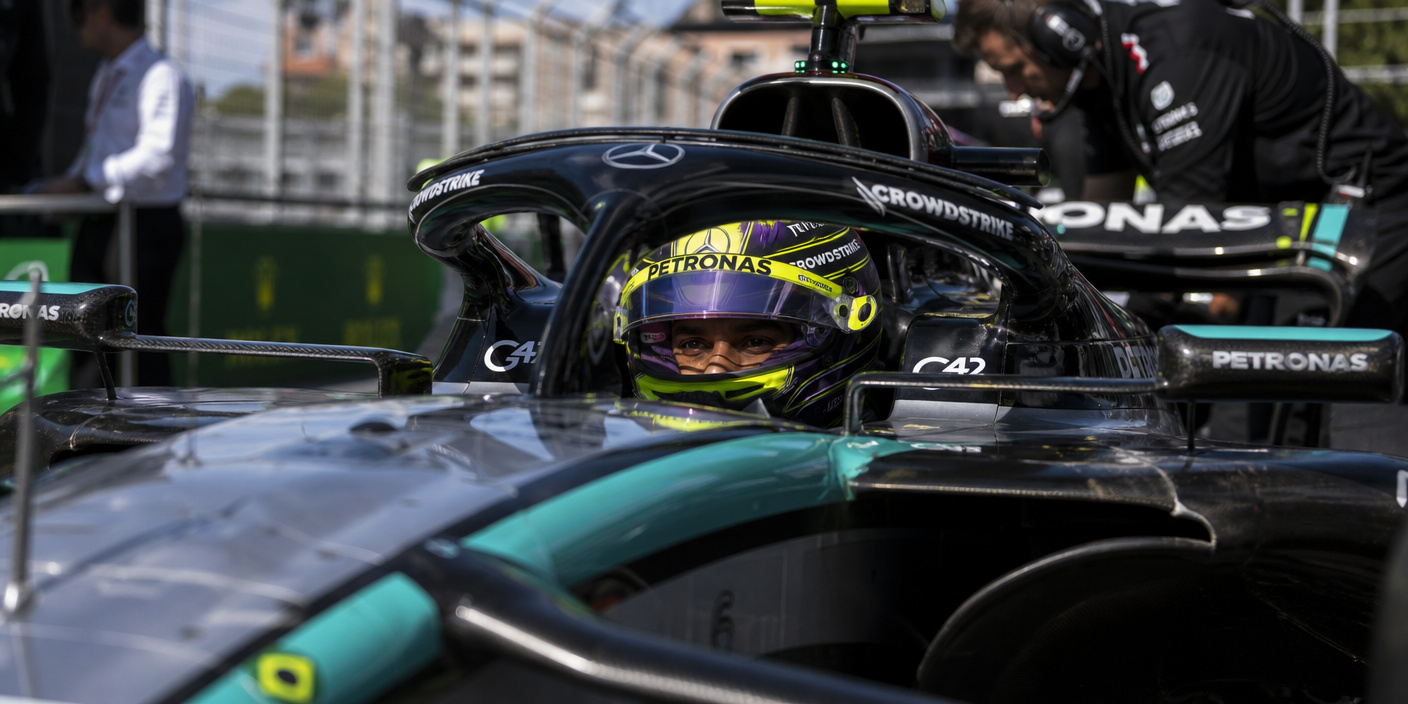
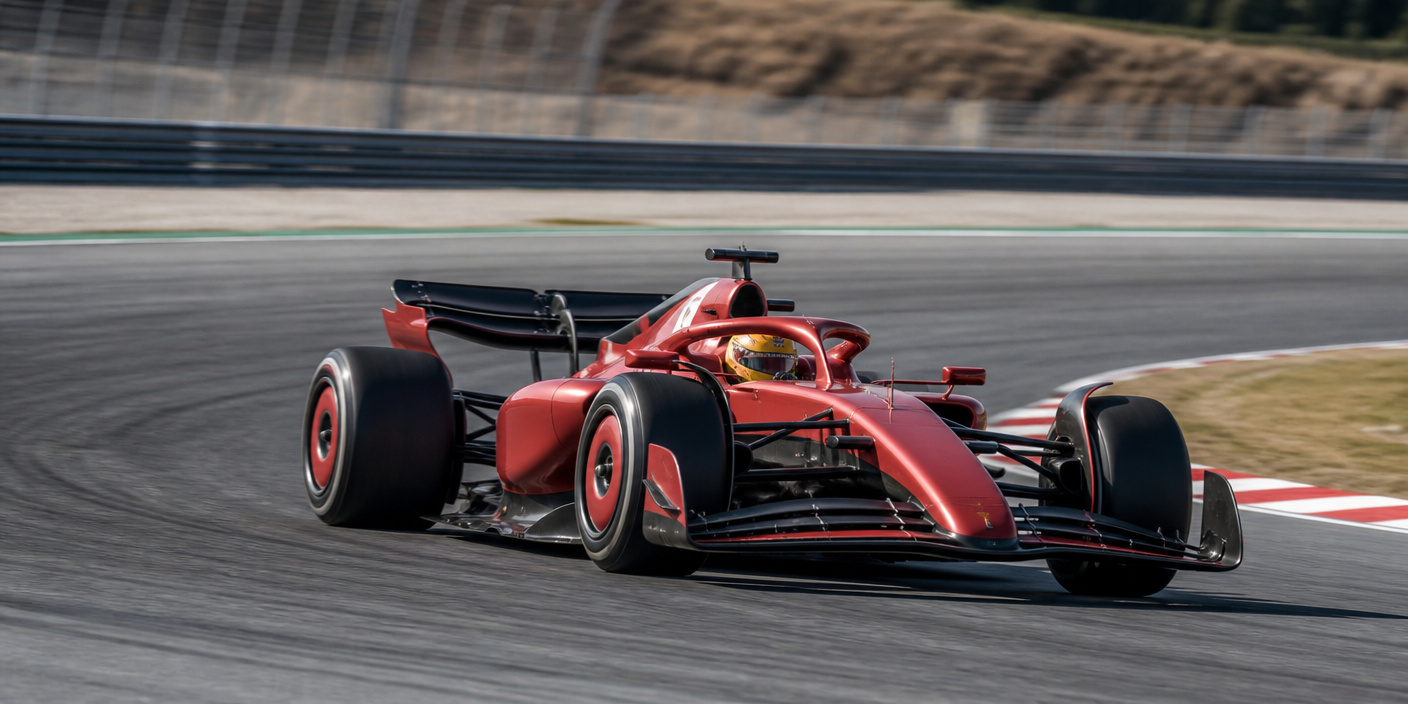
Lewis Hamilton’s quest for a record-breaking eighth World Championship has been unexpectedly accelerated by a technical crisis unfolding within the Mercedes-AMG Petronas camp. As the 2026 Formula 1 season enters its pivotal mid-stage, the seven-time champion—currently sitting second in the Drivers’ Standings—finds himself perfectly positioned to capitalize on a major strategic failure affecting his former team. With Mercedes drivers Kimi Antonelli and George Russell now confirmed to face impending engine penalties due to recurring internal combustion unit (ICE) failures, the championship pendulum has swung heavily in favor of Hamilton and the Scuderia Ferrari outfit.
Key Highlights
- Championship Momentum: Lewis Hamilton currently holds 2nd place in the 2026 F1 Drivers’ Standings, putting him in direct striking distance of the title leader.
- Mercedes Crisis: Both Kimi Antonelli and George Russell are set to incur grid penalties due to excessive power unit component usage.
- Technical Vulnerability: The departure of a key senior powertrain engineer from Mercedes has been cited as a primary catalyst for the current reliability issues.
- Ferrari Strategic Edge: Maranello has maintained superior power unit reliability, providing Hamilton with the stability required for a long-term title push.
The Strategic Shift: How Maranello Capitalizes on Brackley’s Woes
The 2026 Formula 1 season has been characterized by its volatile technical regulations, but the latest developments signal a profound shift in the power balance. For Lewis Hamilton, the transition to Ferrari was never just about a change of scenery; it was a calculated gamble on long-term project viability. That gamble is now yielding significant dividends. While Mercedes dominated the sport for a decade, the current instability—exacerbated by the loss of a pivotal figure in their engine department—has exposed a fragility in the W17 machine.
The Impact of Engine Penalties
In a season where marginal gains decide the championship, grid penalties act as a severe inhibitor. Reliable intelligence confirms that Mercedes has pushed their current power unit concept beyond its thermal threshold, leading to premature failures. The requirement for Kimi Antonelli, the prodigy tasked with filling Hamilton’s seat, and George Russell to introduce fresh internal combustion engines and MGU-H components will result in forced back-of-the-grid starts.
For a team like Mercedes, these penalties are not merely inconveniences; they are strategic roadblocks. As Antonelli and Russell fight their way through the midfield pack in upcoming races, Hamilton’s Ferrari will be battling at the sharp end of the grid. The mathematical reality is simple: for every race where Hamilton maintains his qualifying position while the Mercedes pair starts from the pit lane or the back row, the points gap will likely close to a negligible margin.
Ferrari’s Reliability Advantage
Unlike their rivals, Ferrari has adopted a conservative but robust development pathway for their 2026 power unit. While some critics initially argued that the Scuderia lacked the top-end speed of the Mercedes package, that debate has been rendered moot by the reliability factor. Ferrari’s technical team has focused on cooling efficiency and energy deployment consistency. Hamilton has lauded the team’s transparency, noting that the ability to ‘finish every race with full power’ is the most significant upgrade a driver can receive.
The Human Element: Hamilton’s Psychological Edge
Beyond the telemetry and grid slots, there is the psychological dimension. Hamilton has always thrived in high-pressure championship fights where external factors—be it team reliability or strategic blunders—become decisive. His ability to extract pace from the Ferrari package while navigating the politics of the Maranello garage has shown a level of maturity that suggests he is, perhaps, in the best form of his career. Seeing his former team falter provides an unspoken motivation. There is a palpable sense that Hamilton views this as the final validation of his decision to leave Brackley—a narrative that is increasingly difficult for his critics to ignore.
Secondary Angles: Future Implications for the Grid
1. The Antonelli Test: This season represents a sink-or-swim moment for Kimi Antonelli. How he manages the pressure of a grid penalty start, while fighting for his reputation against a legend like Hamilton, will define his trajectory in the sport for the next five years.
2. The 2026 Technical Regulation Cycle: This season serves as a case study in how quickly fortune turns under the current hybrid regulations. The focus is no longer on pure downforce, but on ‘energy management efficiency.’ Mercedes’ struggle suggests that the regulatory changes may have caught their engineering department by surprise.
3. Economic Impact on Constructor Standings: Should Mercedes finish third or lower in the Constructors’ Championship due to these penalties, the budgetary repercussions will impact their 2027 development cycle, potentially extending this competitive lull into the next season.
FAQ: People Also Ask
Q: How many grid places will Kimi Antonelli and George Russell lose?
A: While the exact number of grid spots depends on the specific power unit components being replaced (e.g., ICE, Turbo, MGU-H), standard FIA regulations suggest a cumulative penalty ranging from 10 to 20 places, effectively forcing a back-of-the-grid start for both drivers.
Q: Is Lewis Hamilton guaranteed the 2026 title because of this?
A: No. While this provides a major boost, Hamilton must still contend with the overall championship leader and potential challenges from McLaren and Red Bull Racing, who remain competitive.
Q: Why is Mercedes struggling with reliability?
A: The primary issue stems from an aggressive power unit design strategy coupled with a recent internal leadership vacuum in the powertrain division, which has led to suboptimal thermal management during high-stress races.
Q: What does this mean for Hamilton’s Ferrari legacy?
A: If Hamilton secures the title under these circumstances, it will be viewed as one of the greatest tactical masterstrokes in F1 history, cementing his legacy not just as a driver, but as a visionary who correctly identified the trajectory of the sport’s technical evolution.