The streets of London, historically a tapestry of multicultural diversity, are facing an intensifying crisis of social cohesion. New data reveals that anti-Muslim hate incidents in the capital have surged six-fold over the last five years, a trajectory that places 2026 on track to surpass the previous record of 1,909 reported incidents. This alarming escalation is not merely a statistical anomaly but a reflection of a widening divide that is increasingly manifesting in public spaces, particularly affecting individuals during daily prayer and community gatherings.
The Anatomy of the Rise
The six-fold increase represents a significant acceleration in hostility that experts and community watchdogs are struggling to contain. The nature of these reports has shifted from abstract online discourse to tangible, physical aggression. Street-level intimidation, verbal abuse, and the disruption of religious observances have become common complaints filed with authorities and support organizations like Tell MAMA (Measuring Anti-Muslim Attacks).
The 2026 projection is particularly concerning. With the previous record of 1,909 incidents having been set in a climate of relative volatility, the current acceleration suggests that the underlying drivers of this hatred—ranging from misinformation to geopolitical stressors—are more pervasive than in previous years. The Metropolitan Police Service is currently under pressure to increase patrols in vulnerable areas, but many community leaders argue that policing alone cannot address the root causes of such systemic intolerance.
Targeting Faith: The Human Cost
Perhaps the most distressing aspect of this trend is the targeted disruption of prayer and religious gatherings. Mosques and community prayer centers, which serve as sanctuaries for London’s Muslim population, have increasingly become sites of confrontation.
Victims report feeling a heightened sense of vulnerability. When religious practice, which is central to community life, is subjected to intimidation, it forces a retreat from the public sphere. This phenomenon has a chilling effect on community cohesion. The psychological toll on those subjected to these incidents—particularly when they involve aggressive confrontations while attempting to practice their faith—is profound. It creates an atmosphere of fear that fundamentally alters how families navigate the city’s public life.
The Drivers of Escalation: A Complex Web
The sharp rise in incidents can be attributed to several intertwined factors. The digital ecosystem plays a substantial role; the speed at which polarized rhetoric and disinformation travel on social media platforms directly influences real-world behavior. When discriminatory narratives gain traction online, they frequently manifest as street-level prejudice.
Furthermore, the socioeconomic climate in London acts as a force multiplier for existing tensions. As economic pressures mount, scapegoating frequently targets minority populations. This is not a new sociological phenomenon, but the speed at which it has intensified in the capital suggests that current mitigation strategies, including education programs and hate-crime awareness campaigns, are failing to reach the demographics most susceptible to radicalization or hateful behavior.
Community Resilience and Future Predictions
Despite the somber statistics, there is a push for resilience. Local interfaith groups, the Mayor of London’s office, and grassroots organizations are attempting to build stronger safety nets for targeted communities. These initiatives range from increased security measures at prayer centers to public campaigns aimed at fostering inter-community solidarity.
Looking toward the future, the prediction for 2026 remains a point of significant concern. If the current trajectory holds, London risks normalizing a climate of intimidation that could take generations to undo. Experts predict that without a robust, multi-agency intervention—one that involves technology companies regulating hate speech, the Metropolitan Police focusing on proactive protection, and civic leaders fostering deeper engagement—the record-breaking statistics of 2026 will simply become the new baseline for subsequent years.
Secondary Angle: The Economic Impact of Hate
While the human cost is the most immediate concern, the economic impact of rising hate crime on London’s multicultural neighborhoods cannot be ignored. When streets become perceived as unsafe, foot traffic to local businesses owned by minority community members decreases. This creates a cycle of economic withdrawal that further destabilizes neighborhoods, making them even more susceptible to the very social fractures that fuel hate incidents.
Secondary Angle: The Role of Digital Legislation
The correlation between online hate speech and physical incidents is now undeniable. As legislation regarding online safety continues to evolve in the UK, the pressure on social media giants to curtail the spread of Islamophobic content has reached a boiling point. The government is being pushed to treat these platforms as publishers, holding them liable for the real-world violence their algorithms may inadvertently amplify.
Secondary Angle: Mapping the Geography of Fear
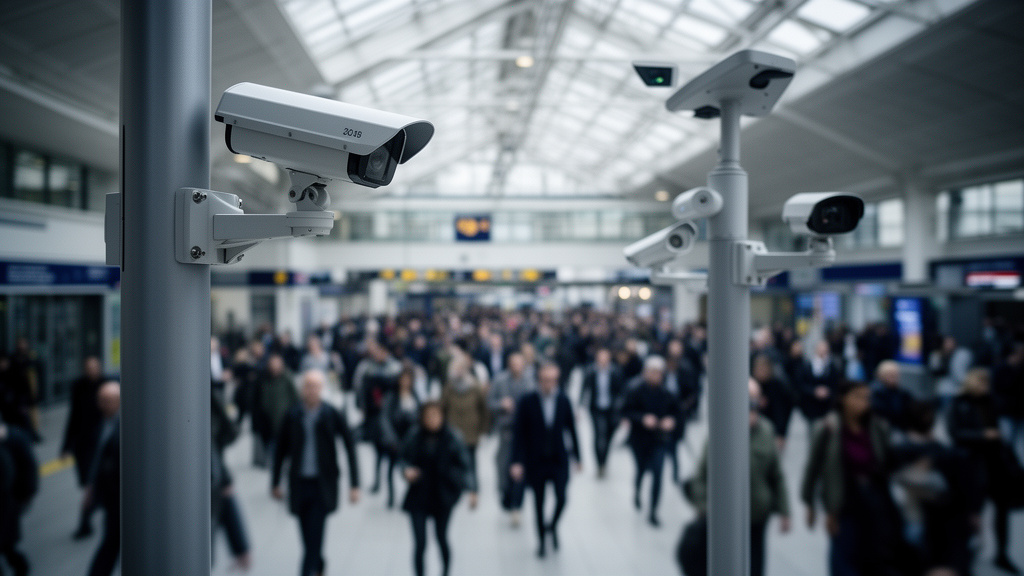
Data mapping indicates that these incidents are not evenly distributed. Certain boroughs are seeing higher concentrations of reports than others. By identifying these ‘hotspots,’ authorities may be able to implement localized strategies, such as increased lighting, surveillance, or community liaison officers, to mitigate risk before an incident occurs. This spatial analysis is crucial for moving from a reactive to a proactive enforcement posture.
FAQ: People Also Ask
What qualifies as an anti-Muslim hate incident?
An anti-Muslim hate incident is defined as any incident that is perceived by the victim or any other person to be motivated by hostility or prejudice based on a person’s actual or perceived religion, specifically Islam. This encompasses everything from verbal abuse and threats to criminal damage and physical assault.
How does the Metropolitan Police respond to these reports?
The Metropolitan Police Service tracks these incidents through official hate crime reporting mechanisms. They utilize victim statements, CCTV evidence, and community intelligence to investigate. However, they face challenges with low reporting rates, as many incidents go unrecorded due to victim hesitation or lack of trust in the justice system.
Why are 2026 figures expected to be so high?
Based on current year-to-date reporting data and the observed frequency of incidents in the first three quarters of 2026, statisticians have extrapolated that the volume will exceed the previous historical peak of 1,909 cases. This trend is driven by consistent, high-volume reporting across multiple boroughs.
What resources are available for victims in London?
Victims can report incidents directly to the Metropolitan Police or through third-party reporting centers like Tell MAMA. These organizations offer confidential support, guidance on how to report hate crimes, and assistance in navigating the legal process.