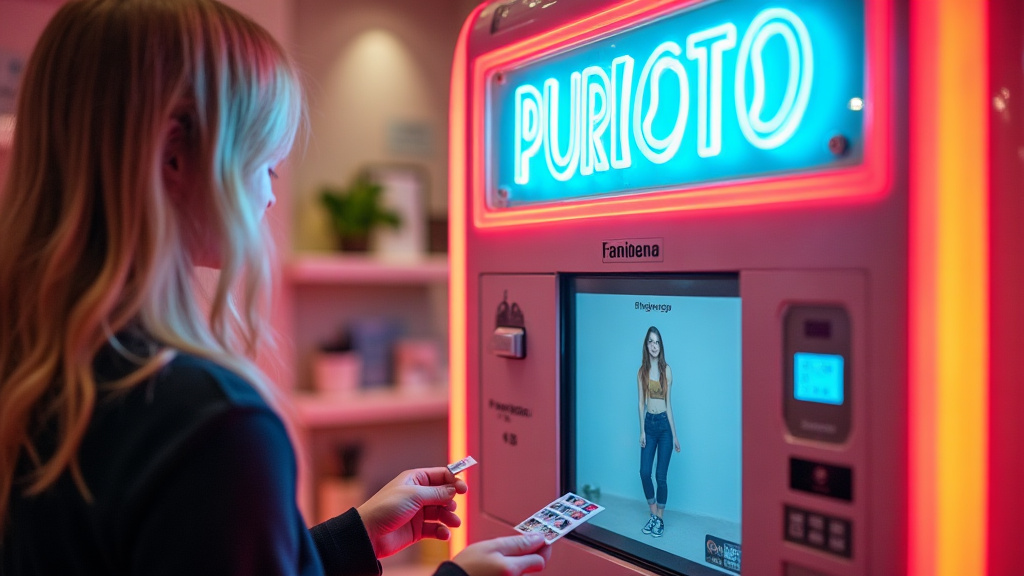
A wave of tactile nostalgia is sweeping across London’s busiest social districts as ’90s-style sticker photo booths, known globally as ‘Purikura,’ undergo a massive, viral resurgence. Far from being relegated to history, these machines are now the centerpiece of Gen Z nightlife and retail experiences, transforming the city’s approach to digital documentation. By prioritizing physical, printed keepsakes over ephemeral smartphone selfies, London’s youth are signaling a shift toward ‘phygital’ interactions—where the physical print serves as the ultimate social currency.
Key Highlights
- The Purikura Revival: Japanese-style print club machines are dominating in trendy London hubs like Soho and Chinatown.
- Tangible Over Digital: Gen Z consumers are moving away from curated social media feeds in favor of physical, sticker-backed photo strips that provide a permanent, authentic memory.
- The ‘Phygital’ Effect: These booths have successfully bridged the gap between retro hardware and modern vanity, with photo strips often being scanned immediately to be re-uploaded to platforms like TikTok and Instagram.
The Retro-Tech Revolution in London
The phenomenon of the ’90s sticker photo booth—a staple of Tokyo’s street culture in the late 20th century—has found an eager and unexpected audience in 21st-century London. These booths, which offer users the ability to take multiple shots, edit them with digital stamps, and print them on adhesive-backed paper, are cropping up in high-footfall areas across the city. Unlike standard passport photo booths, these machines are designed for social expression, featuring bright, flattering lighting and complex software that smooths skin tones and widens eyes, playing into the aesthetic trends favored by modern social media users.
Why London’s Youth Are Hooked
The sudden popularity of these booths is not merely a novelty; it is a calculated reaction to the hyper-digital age. For a generation that has grown up with photos living exclusively in the cloud, the physical photo strip offers a sense of permanence and ‘realness’ that a smartphone camera cannot provide. The process—waiting for the printer, the anticipation of the output, and the physical act of peeling a sticker—creates a shared experience that is inherently communal, rather than individualistic. It is an activity, not just a capture.
The Soho & Chinatown Hubs
The trend has found its epicenter in London’s Soho and Chinatown, where K-pop and J-pop cultural influences have long held sway. Shops that integrate these machines are reporting significantly higher dwell times. The booths are often placed strategically near entrances or within dedicated ‘selfie’ corners, forcing a pause in the retail flow that encourages socialization. Retail analysts have noted that this is a smart pivot for brick-and-mortar stores, which must provide an experience that cannot be replicated by e-commerce giants.
The Aesthetic of Authenticity
Interestingly, the low-fi, slightly over-exposed look of these stickers has become an aesthetic in itself. In a world of heavily filtered, high-resolution smartphone photography, the specific, slightly distorted, and stylized output of a Purikura machine feels ‘authentic’ and ‘curated.’ It is a form of ironic appreciation for tech that preceded the smartphone, creating a cyclical trend where the old feels new, fresh, and strikingly counter-cultural.
Economic and Social Implications
The resurgence is driving significant foot traffic to specific retail venues, turning photo booths into ‘anchor’ attractions. This economic impact is palpable; owners of these machines report consistent queues, particularly on weekends. The financial model is robust, as the booths monetize the human desire for social validation and peer-group bonding. Furthermore, this trend highlights a broader shift in consumer behavior: the rejection of convenience in favor of an ‘event-based’ retail interaction.
Looking ahead, we can expect this trend to expand beyond current hubs. Major fashion retailers are already experimenting with in-store photo experiences that mimic this style, recognizing that the physical photo strip is a highly effective, low-cost marketing tool. When a user prints a strip, they almost invariably photograph the physical print with their phone to share online—effectively creating a user-generated advertisement for the venue.
FAQ: People Also Ask
Q: What exactly is a ‘Purikura’ machine?
A: Purikura is a portmanteau of ‘Print Club,’ a Japanese term for photo booths that allow users to take photos, customize them with digital stickers, text, and decorative borders, and print them onto adhesive sheets.
Q: Why are these booths becoming viral in London now?
A: It is part of a larger ‘Y2K’ and ’90s’ nostalgia trend. Gen Z is actively seeking offline, tactile experiences that offer immediate physical gratification, contrasting with the purely digital nature of social media.
Q: Are these photos digital or physical?
A: They are both. While the machines output a physical, sticker-backed photo strip, most modern versions now include a QR code to download a digital version of the set, satisfying the modern need for social media sharing while preserving the retro charm of the print.
Q: Where can I find these booths in London?
A: They are primarily concentrated in Soho, Chinatown, and specific youth-oriented retail spaces in Covent Garden, often located within gift shops or specialized electronics boutiques.