
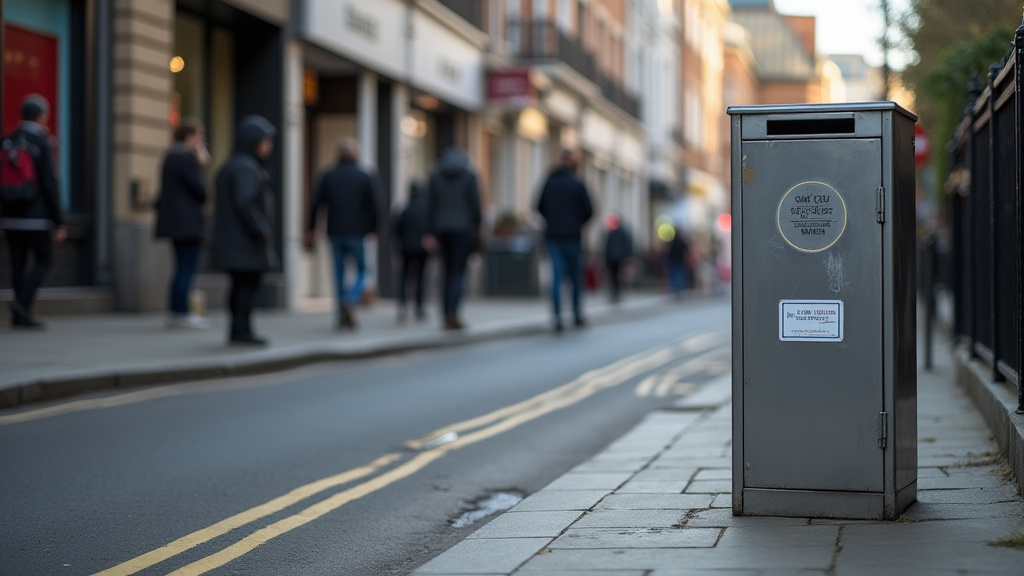
The latest public safety initiative, bolstered by comprehensive Home Office support, has achieved a significant milestone in the ongoing effort to curb knife-related violence in the capital. By facilitating the surrender of 14,500 knives and offensive weapons through secure, designated bins, authorities have demonstrated a scalable model for reducing the availability of lethal instruments in public spaces. This operation, which aligns with long-term Metropolitan Police strategies, highlights the efficacy of non-punitive surrender programs in removing potential catalysts for crime from circulation. As community leaders and law enforcement analyze the data, the removal of this volume of weaponry serves as both a measurable victory and a stark indicator of the scale of weapon possession that local authorities continue to address.
Key Highlights:
- 14,500 weapons were successfully surrendered via secure, Home Office-backed bins, preventing them from potentially entering the criminal justice ecosystem.
- The operation functions under an amnesty framework, allowing individuals to relinquish weapons without the threat of immediate prosecution for possession.
- Data suggests these surrender programs are instrumental in dismantling the supply chain of illicit items, particularly among youth-focused outreach initiatives.
- Metropolitan Police continue to utilize these surrenders as a vital component of broader efforts, such as Operation Sceptre, to reduce knife crime statistics across London.
Analyzing the Mechanics of Weapon Amnesty
The fundamental premise of the Home Office-backed surrender program is the concept of a ‘no-questions-asked’ amnesty. This is designed to break down the barriers between the public and law enforcement, creating a safe pathway for individuals to dispose of weapons that might otherwise be discarded in public areas, creating immediate danger for the community. By strategically placing these bins in high-traffic or high-risk neighborhoods, the operation minimizes the difficulty of disposal, thereby increasing the likelihood that a weapon will be safely removed rather than kept or irresponsibly abandoned.
The Role of Operation Sceptre
This initiative does not exist in a vacuum. It is heavily integrated with the Metropolitan Police’s ‘Operation Sceptre,’ which focuses on aggressive, intelligence-led disruption of knife crime. While Sceptre typically involves stop-and-search tactics and targeted enforcement against known offenders, the surrender bins provide a necessary, passive complement. This dual-pronged strategy ensures that law enforcement is simultaneously removing weapons from the supply side—through surrender—and the demand side—through enforcement and education.
Psychological and Social Impact
Beyond the raw statistics of 14,500 items, the program addresses the psychological burden carried by community members who may find themselves in possession of a weapon—either inherited, found, or previously carried for ‘protection.’ The surrender bin offers a ‘clean slate’ mechanism. When an individual chooses to surrender a blade, they are opting out of a cycle of potential violence. Public health experts have long argued that knife crime is often driven by localized fear; by reducing the ubiquity of weapons, the perceived necessity to carry one for defense is arguably diminished.
The Socio-Economic Drivers of Weapon Possession
To understand the persistence of knife crime, one must look past the weapons themselves and toward the socio-economic drivers. Many of the items surrendered through this Home Office-supported operation are everyday kitchen knives, illustrating that the problem is not merely about illicit firearm-style weapons, but the repurposing of household items into tools of harm. This shift in understanding has forced a change in policy, leading to tighter regulations on the sale of knives and increased scrutiny on online retailers.
Strategic Partnerships and Community Trust
One of the most critical elements of this program’s success is the partnership between the Home Office and local Community Safety Partnerships. Trust in law enforcement is often a variable that determines the success of amnesty programs. By ensuring that the bins are anonymous, the program effectively mitigates the fear of arrest, which is often the primary deterrent for someone attempting to dispose of a weapon. This trust-building exercise is perhaps the most valuable, albeit intangible, outcome of the surrender initiative.
Future Outlook: Tech and Tracking
As the program evolves, there is increasing interest in leveraging technology to track the efficacy of weapon surrenders. Authorities are beginning to use geospatial data to map exactly where these bins are most effective, allowing for the rotation of bins to ‘hot zones’ where knife crime reports are highest. Furthermore, forensic analysis of the surrendered items can provide intelligence on weapon sourcing—identifying whether knives are being stolen from retailers, repurposed from homes, or sourced through illicit trade routes.
Policy Evolution
The Home Office has signaled that these surrender programs will likely continue to receive funding, provided they yield tangible results. However, experts warn that amnesty alone cannot solve knife crime. It must be paired with robust social services, youth mentoring, and economic opportunities that provide alternatives to gang affiliation or street-level crime. The 14,500 weapons removed represent a successful intervention, but they are a symptom of a larger, systemic challenge that requires a holistic, long-term policy response rather than singular, reactive measures.
FAQ: People Also Ask
How does the ‘no-questions-asked’ policy work?
The surrender bins are designed to be anonymous. Individuals can deposit a weapon without providing identification or facing immediate police interrogation. This is to encourage participation from people who may fear that surrendering a weapon would lead to an investigation regarding how they obtained it.
What happens to the weapons after they are deposited?
Once collected by authorized personnel, the weapons are securely transported to disposal facilities. They are typically subjected to forensic screening if there is suspicion of criminal linkage, after which they are destroyed in an industrial shredder or furnace to ensure they can never be used again.
Are these programs actually reducing violent crime?
While crime statistics are complex and influenced by many variables, police data consistently indicates that the removal of these weapons from the streets prevents them from being used in future altercations. When combined with targeted enforcement and educational programs, amnesty bins are considered a vital tool in a comprehensive strategy to lower violent crime rates.