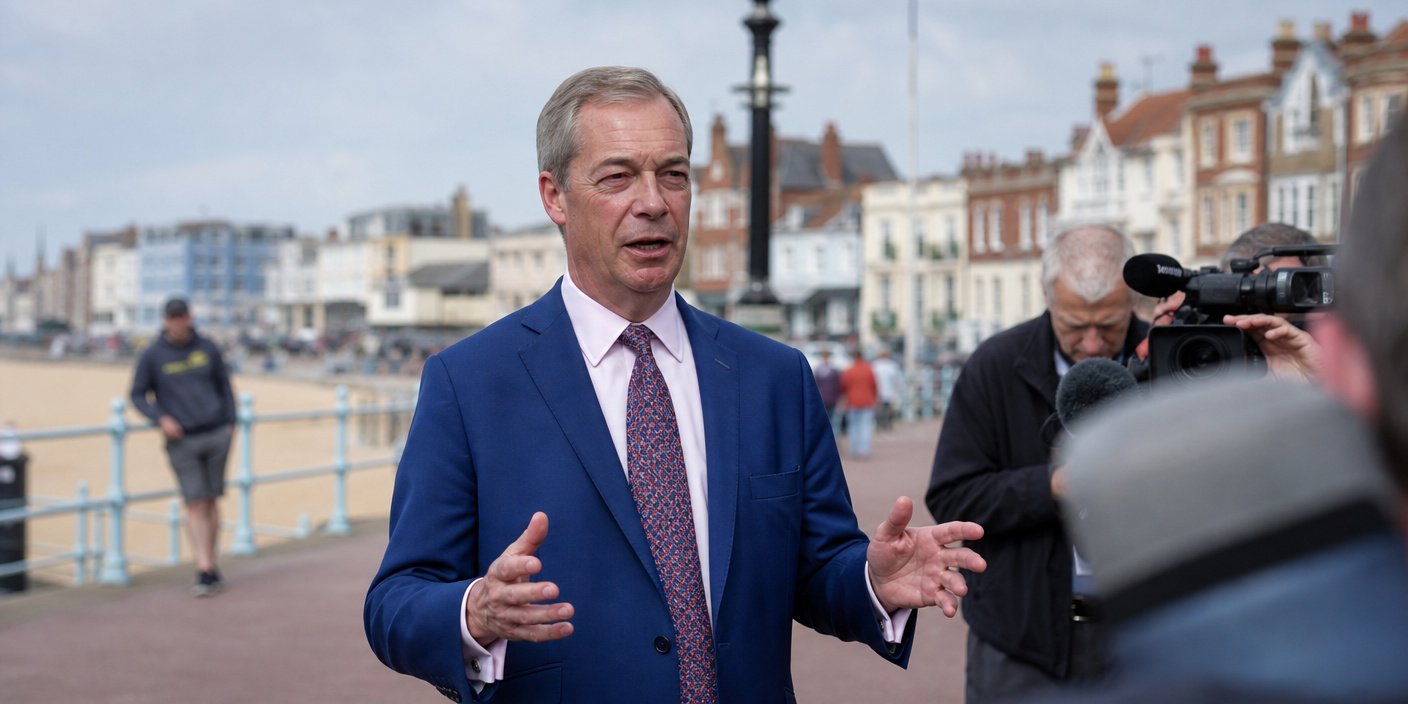
Nigel Farage has officially secured his return to the UK Parliament after a decisive victory in the Clacton-on-Sea by-election, with official results confirmed on August 14, 2026. This victory marks a significant milestone for the Reform UK party, cementing Farage’s role as a potent force in British opposition politics as the government navigates a complex legislative cycle. While the campaign was marked by high-profile media scrutiny and the inclusion of unconventional satirical candidates, the final ballot count has solidified a clear mandate for the Reform leader within this coastal constituency.
Key Highlights
- Decisive Victory: Nigel Farage claimed the Clacton-on-Sea seat on August 14, 2026, marking his long-awaited return to the parliamentary benches.
- Unconventional Opposition: The election garnered national attention due to the presence of high-profile satirical candidate Count Binface, who claimed to run on a platform of ‘galactic equality’ and local infrastructure reform.
- Reform UK Momentum: This win serves as a major tactical victory for Reform UK, signaling an expansion of their voter base beyond traditional conservative strongholds.
- Parliamentary Impact: Farage’s return is expected to shift the dynamics of parliamentary debate, particularly regarding economic policy and immigration oversight in the coming months.
The Resurgence of the Reform Agenda
The Clacton-on-Sea by-election, declared on August 14, 2026, was more than just a local contest; it served as a referendum on the current administration’s trajectory. Nigel Farage’s return to the House of Commons brings a level of oratorical experience and institutional challenge that has been absent during his previous stints outside the legislature. For the residents of Clacton, the result represents a desire for a different style of political representation, one that emphasizes the populist, nationalist, and economic-reformist platforms that Farage has cultivated for decades.
The ‘Binface’ Phenomenon and the Satirical Vote
Perhaps the most unusual facet of this by-election was the prominent challenge mounted by the candidate known as ‘Count Binface.’ While some pundits dismissed the candidacy as a mere novelty, the presence of such figures in the Clacton contest underscored a deeper trend in modern British democracy: voter fatigue. Count Binface’s platform, while clearly satirical, tapped into the frustrations of constituents who feel that mainstream politics often ignores local, practical infrastructure needs. By contrasting his bizarre, sci-fi-themed rhetoric against the hard-nosed political maneuvering of Farage, Binface inadvertently highlighted the polarized nature of the modern electorate. This duality created a ‘widely mocked’ election atmosphere that saw mainstream news outlets grappling with how to balance serious political coverage with the absurd reality of the campaign trail. Despite the absurdity, the underlying turnout figures suggest that voters in Clacton were highly engaged, treating the election as a serious opportunity to force a change in the national discourse.
Decoding the Clacton Mandate
Political analysts have spent the days following the August 14 announcement dissecting the voting demographics. The victory for Reform UK was not merely a protest vote; it represents a consolidation of the ‘left-behind’ coastal demographic. In Clacton, the combination of economic stagnation and a perceived lack of parliamentary focus on local issues provided the perfect soil for Farage’s brand of populist communication. The data indicates that crossover voters—those previously aligned with both major legacy parties—were willing to break their historical voting patterns to back the Reform candidate. This signals a shifting realignment in British politics, where constituency-specific issues are increasingly driving electoral outcomes over national party loyalty.
The Institutional Re-entry: Challenges Ahead
As Farage prepares to take his seat, the immediate question involves the level of influence he will be able to exert. The parliamentary structure is designed to absorb and diffuse individualistic political operators. However, Farage has historically utilized the platform of the Commons to direct media attention toward the issues that his party deems central to the national interest. Whether he can translate this local by-election success into a broader, sustainable influence within the House remains to be seen. The coming parliamentary sessions will likely feature a sharper, more combative tone, particularly as Farage attempts to pressure the government on the specific promises made during the campaign. Critics argue that his presence will lead to increased parliamentary gridlock, while his supporters see it as the necessary ‘shot in the arm’ that the current legislative process desperately needs.
FAQ: People Also Ask
Q: Why was the Clacton-on-Sea by-election considered ‘widely mocked’?
A: The election was labeled as such primarily due to the high-profile candidacy of Count Binface. The juxtaposition of a seasoned, controversial politician like Nigel Farage against an outlandish satirical character created a chaotic and surreal media narrative that dominated headlines, leading to public ridicule of the electoral process.
Q: What does Nigel Farage’s win mean for the future of Reform UK?
A: His win provides the party with a crucial parliamentary foothold. It legitimizes their national presence, allows them to participate in formal debates, and provides a platform to hold the government directly accountable on the floor of the House of Commons.
Q: How did the voting results for August 14, 2026, impact the local political climate?
A: The results demonstrated a clear desire for a change in leadership at the local level. It proved that the Reform UK party has successfully transitioned from a fringe political movement into a constituency-winning force, effectively displacing traditional party dominance in Clacton.