
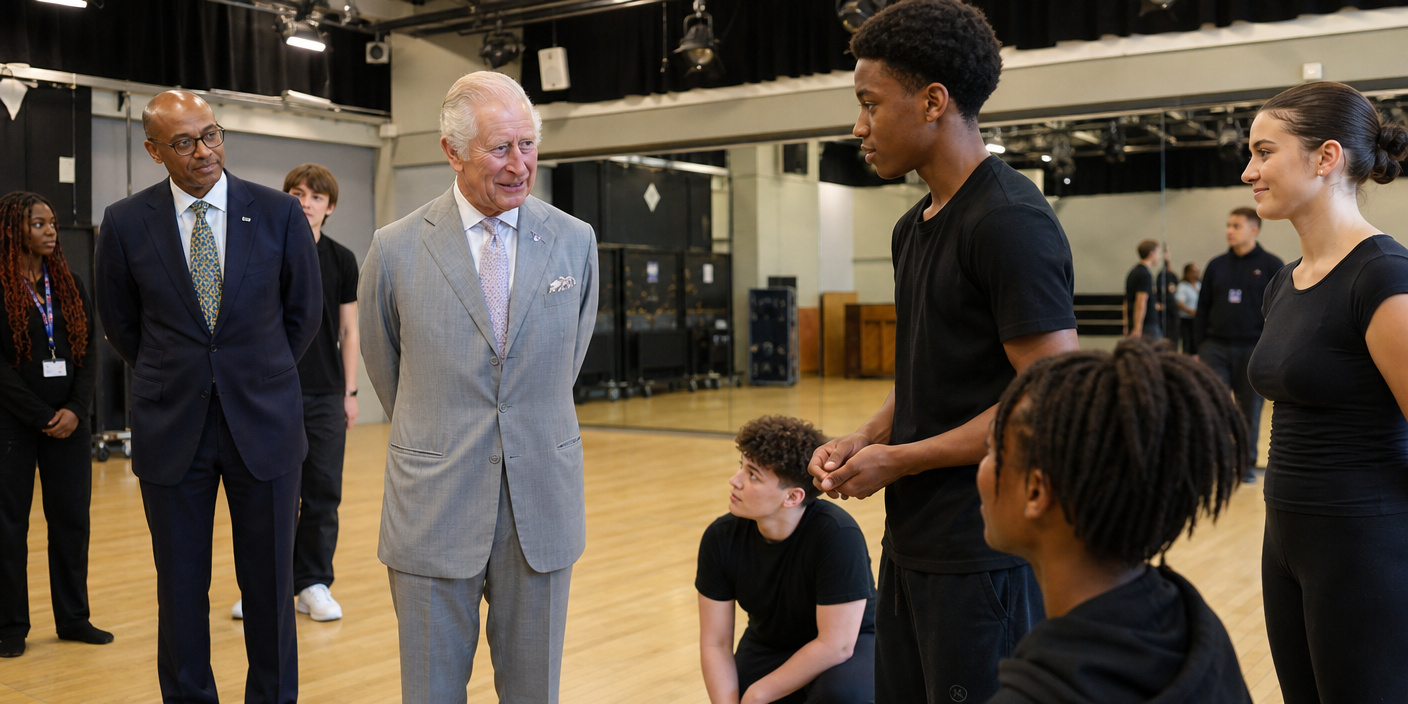
In a momentous and unannounced appearance that has invigorated the local community, King Charles III paid a surprise visit to The BRIT School in Croydon, south London. The monarch, ahead of his upcoming 78th birthday, spent the afternoon engaging directly with students, faculty, and staff, underscoring his longstanding commitment to the arts and the development of young creative talent in the United Kingdom.
Key Highlights
- Surprise Appearance: King Charles III made an unannounced visit to The BRIT School in Croydon to engage with students directly.
- Artistic Celebration: The visit was timed as a pre-birthday celebration, focusing on the school’s unique contribution to the performing and creative arts.
- Mentorship and Engagement: The monarch observed workshops and rehearsals, highlighting the importance of arts education for the next generation.
- South London Impact: The visit draws national attention to the significance of creative institutions situated outside of central London.
A Royal Spotlight on Creative Excellence
The unexpected arrival of King Charles III at The BRIT School provided a distinct highlight for the student body. Known as a world-class institution responsible for launching the careers of numerous global icons—ranging from Adele to Amy Winehouse—the school stands as a beacon for creative potential. By selecting this specific institution for a pre-birthday engagement, the King signaled a clear appreciation for the gritty, practical, and highly skilled training that occurs within the walls of this Croydon establishment.
The Intersection of Tradition and Modern Talent
While the monarchy is often associated with traditional cultural institutions like the Royal Opera House or the National Theatre, this visit to The BRIT School—a state-funded creative arts college—marked a strategic embrace of modern, grassroots creative culture. The interactions were reported to be informal and enthusiastic, with the King taking a genuine interest in the specific craft areas, including dance, technical theater, and music production. By focusing on the students’ work rather than the fanfare, the monarch emphasized the role of the arts as a vital component of a healthy, functioning society.
Analyzing the Cultural Significance
This visit serves as a catalyst for a deeper conversation regarding arts education in the UK. The BRIT School occupies a unique position in the educational landscape, being free for students while providing professional-grade training. The King’s presence acts as a powerful endorsement of this model. It bridges the gap between heritage-based cultural preservation and the forward-looking, evolving nature of the entertainment industry. For many students and staff, the visit was not merely a ceremonial gesture but a validation of their career paths and the cultural value of their ongoing studies.
Croydon’s Growing Cultural Renaissance
Beyond the school itself, the visit puts a renewed spotlight on Croydon. Once viewed primarily through the lens of suburban transport links and shopping centers, the borough has been undergoing a cultural shift, bolstered by institutions like The BRIT School. The King’s visit serves to anchor Croydon as a legitimate and thriving cultural hub within London’s sprawling geography. It highlights how decentralizing high-quality arts education can stimulate local economies and community pride, a topic often explored in urban planning and cultural development studies.
The Monarchy’s Evolving Artistic Patronage
Historically, the British monarchy has served as a primary patron of the arts, often focusing on high-classical forms. However, King Charles III has consistently demonstrated a broader, more eclectic interest. This engagement suggests a tactical shift in how the monarchy interacts with modern media and entertainment. By engaging with the alumni-producing pipelines of the future, the King positions the institution as relevant, forward-thinking, and supportive of the creative industries—an economic sector that contributes significantly to the UK’s GDP.
Future Predictions and The Legacy of Arts Education
As the King approaches his 78th birthday, observers might interpret this visit as a precursor to a wider series of engagements focused on youth and innovation. If the monarchy continues to lean into these types of interactions, it may foster stronger connections with younger demographics who are increasingly focused on creative and digital careers. The long-term impact of such a visit is not just the immediate morale boost for the students, but a sustained interest in the sustainability of arts funding, which remains a contentious issue in current British politics.
FAQ: People Also Ask
Why did King Charles visit The BRIT School specifically?
The BRIT School is a world-renowned institution for performing and creative arts. The King’s visit serves to highlight the importance of arts education and celebrate the school’s unique model of providing professional training within the state education system.
Is this visit related to the King’s birthday celebrations?
Yes, the visit was explicitly framed as part of the celebrations leading up to the King’s 78th birthday, allowing him to focus on the future generation of British talent.
Does The BRIT School receive royal support?
While the school is state-funded, royal visits of this nature provide significant visibility and tacit endorsement of the institution’s success and its vital role in the creative economy of the United Kingdom.
What is the significance of the school being in Croydon?
Croydon has been working to rebrand as a major cultural hub in London. A visit from the King brings national attention to the area’s development and demonstrates that world-class artistic training is happening throughout the capital, not just in central London boroughs.