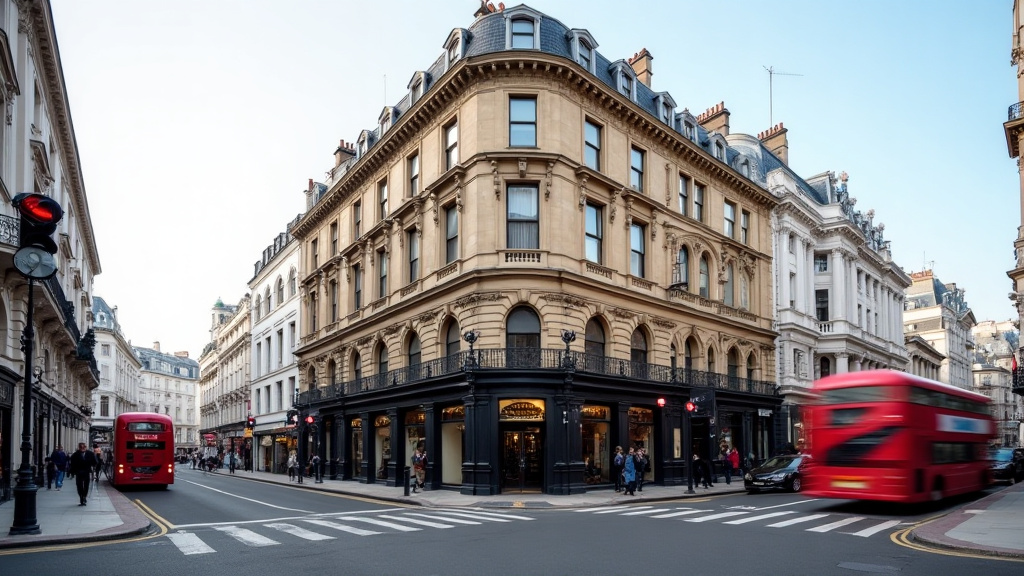
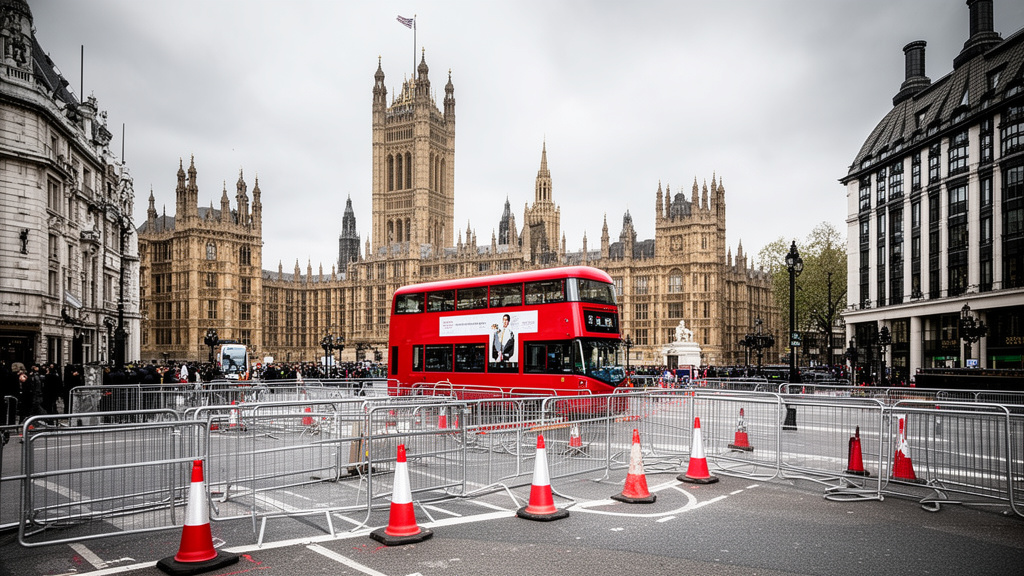
Today, London commuters and residents face substantial travel disruptions as the International Youth Strike demonstration takes place across the city centre, with authorities and the U.S. Embassy urging caution in identified high-activity areas. The planned gatherings, which are expected to draw over 500 participants, have prompted a heightened police presence and localized road closures around key transit corridors, particularly impacting the vicinity of Parliament Square and Trafalgar Square.
Key Highlights
- Protest Clusters: Primary demonstration activity is concentrated at Parliament Square and Trafalgar Square.
- Crowd Size: Estimates suggest over 500 participants, likely impacting transit and vehicle movement.
- Advisories: Both local authorities and the U.S. Embassy have issued formal safety alerts advising the public to remain vigilant.
- Transit Impact: Significant potential for delays across major bus routes and underground station access points within the city centre.
Navigating City Centre Disruption and Safety Protocols
The activation of the International Youth Strike across London today marks a significant logistical challenge for the Metropolitan Police Service and Transport for London (TfL). As the demonstration converges on Westminster, the heart of the capital’s political and tourist infrastructure, the interplay between freedom of assembly and urban mobility becomes the primary concern for city planners and law enforcement.
The Geography of the Strike
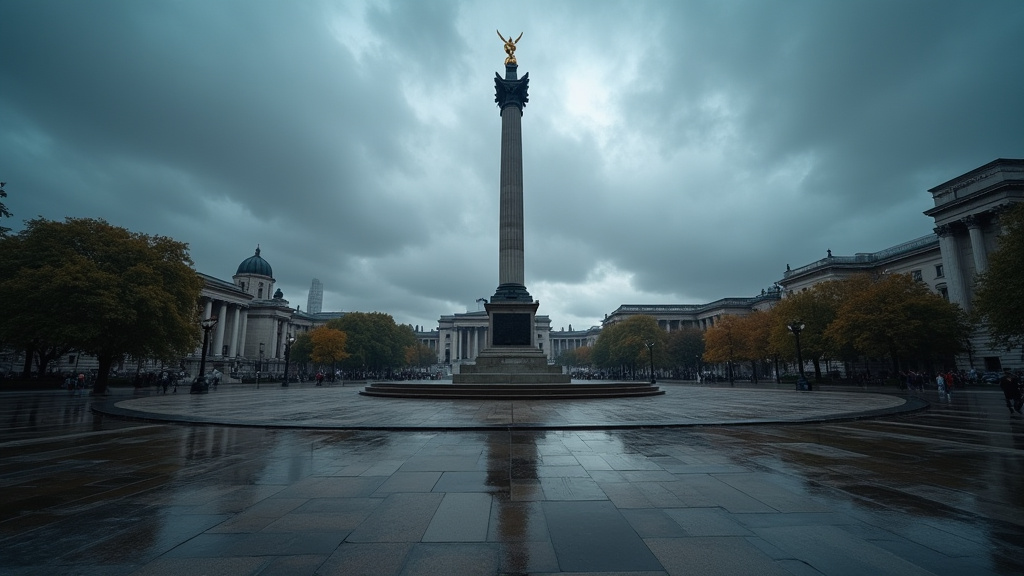
Parliament Square and Trafalgar Square act as the epicentres for this mobilization. These locations are not merely symbolic; they are the literal junctions where government policy meets public discourse. For today’s demonstration, the geography is critical. Parliament Square serves as the gateway to the Houses of Parliament and Whitehall, while Trafalgar Square functions as a major thoroughfare connecting the West End to the City. The presence of over 500 participants in these confined, high-traffic spaces is expected to create a cascading effect on vehicle and public transport throughput throughout the morning and afternoon hours.
U.S. Embassy and Law Enforcement Response
It is standard operational procedure for the U.S. Embassy in London to issue security alerts when mass gatherings are planned in proximity to diplomatic or high-traffic areas. The current advisory emphasizes the potential for spontaneous route changes and the unpredictability of crowd dynamics. Authorities are employing a strategy of ‘facilitated containment’—a policing approach designed to balance the right to protest with the necessity of maintaining order and preventing total gridlock. Residents are advised to monitor TfL status updates, as even minor delays at these central hubs often ripple out into wider congestion across the congestion charge zone.
Secondary Angle: The Logistics of Urban Protest Management
Modern protest management in a city as dense as London requires a delicate interplay between public safety and the democratic right to assembly. The Metropolitan Police have historically struggled to manage protests in these specific squares because they are ‘choke points’ for London’s transport network. When these hubs are blocked, the entire central bus network—which is heavily reliant on passing through Westminster—faces immediate disruption. This creates a secondary economic impact, where service workers, couriers, and delivery logistics are hindered, potentially costing small businesses in the city centre significant operational time.
Secondary Angle: The Resilience of Commuter Infrastructure
London’s commuter infrastructure is uniquely susceptible to disruption due to its reliance on both subterranean (London Underground) and surface-level (bus) transport. While the Underground stations themselves (such as Westminster, Embankment, and Charing Cross) often remain open, surface-level exits are frequently restricted by police cordons to prevent overcrowding or to manage entry/exit flows. This leads to a common secondary effect: commuters are often left in the dark regarding which station exits are blocked, leading to increased pressure on alternative routes and unexpected ‘crush’ conditions at adjacent stations.
Secondary Angle: Historical Context of the Movement
The International Youth Strike has evolved from a sporadic activist movement into a consistent feature of the London protest landscape. Unlike spontaneous social outbursts, these organized strikes are characterized by high visibility, strategic route planning, and the use of social media to coordinate real-time movements. This evolution has forced law enforcement to update their tactical response, moving away from aggressive suppression toward dynamic traffic management and diversionary tactics, reflecting a broader change in how the UK handles civil disobedience in the 21st century.
FAQ: People Also Ask
1. Are there specific road closures I should avoid?
Yes. Authorities have indicated that roads surrounding Parliament Square and Trafalgar Square are the most likely to face rolling closures or severe restrictions. It is advised to avoid driving through the Westminster and Whitehall areas entirely.
2. What is the safest course of action if I am near a demonstration?
Both the U.S. Embassy and the Metropolitan Police advise remaining aware of your surroundings, avoiding any areas where large groups are forming, and if a protest becomes rowdy, to move away immediately to a secondary location or transit hub.
3. Will the London Underground be impacted?
While stations are expected to remain operational, overcrowding is highly likely at Westminster, Embankment, and Charing Cross. Expect longer waiting times for entry, and consider using alternative stations or walking where possible.
4. How long will the disruptions last?
The demonstrations are currently scheduled for today, November 20. Disruption is expected to peak during the afternoon, though lingering traffic impacts may continue into the evening commute hours.
5. Where can I find real-time traffic updates?
For live updates, residents should consult the Transport for London (TfL) website and official social media channels, as well as the Metropolitan Police service updates for specific, localized road closure information.