As the global race for artificial intelligence accelerates, the industrial reality of ‘the cloud’ is crashing into London’s outskirts. Residents are rallying against massive hyperscale data centre proposals, labeling the encroaching infrastructure a “crisis for the future” that threatens local stability, biodiversity, and energy security. While AI may be virtual, its footprint is distinctly physical, requiring immense energy, cooling, and land, placing it in direct conflict with residents of the London commuter belt.
Key Highlights
- The UK faces a rising wave of local opposition to hyperscale data centre developments, specifically in the commuter belt surrounding London and the Home Counties.
- Primary resident concerns include massive power consumption, 24/7 noise pollution from industrial cooling systems, and the permanent scarring of protected Green Belt land.
- Critics argue that while AI promises innovation, the physical infrastructure forces local communities to bear the environmental and social costs without providing significant local job creation or economic benefits.
The Silicon Siege: Understanding the London Data Centre Revolt
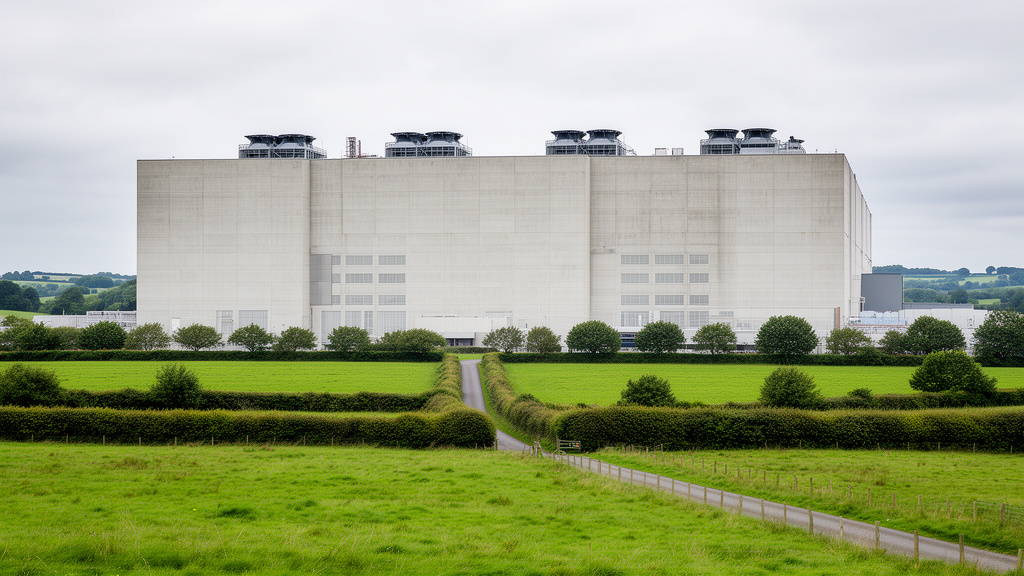
For decades, the “Green Belt” surrounding London has served as a buffer against urban sprawl, a sanctuary of biodiversity, and a protected zone meant to prevent continuous, suffocating development. Today, however, that buffer is under siege—not by housing estates, but by the silent, windowless monoliths of the 21st century: hyperscale data centres.
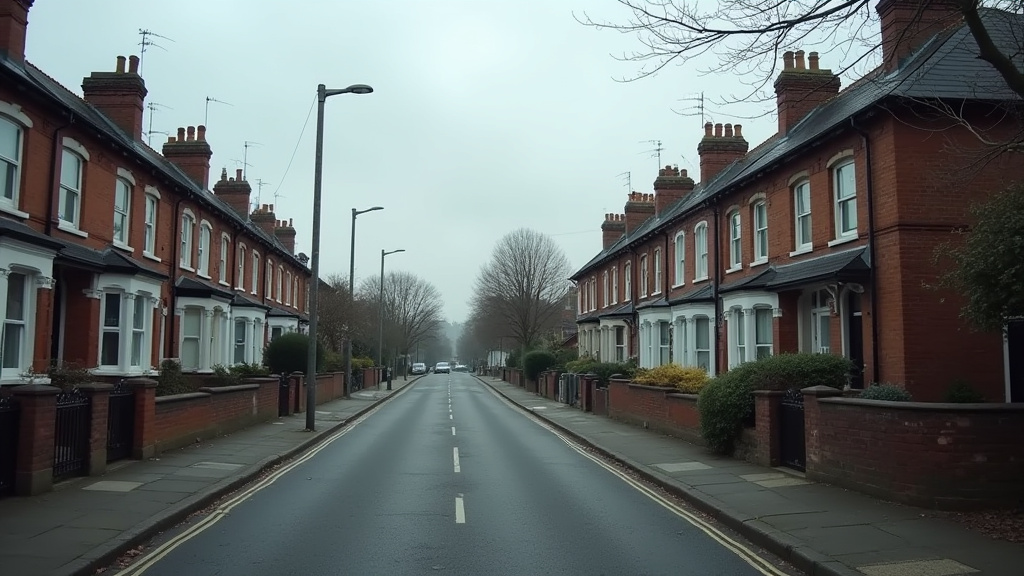
These facilities, essential to the computational requirements of Artificial Intelligence, are being proposed in increasing numbers near the M25 and throughout the Home Counties. Residents who have long enjoyed the relative quiet of the English countryside are now finding themselves in the shadow of industrial-scale developments that operate 24 hours a day, seven days a week. The sentiment on the ground is shifting from cautious concern to organized resistance, with many locals describing the rapid proliferation of these sites as a “crisis for the future.”
Power Hunger: The Energy Grid Dilemma
Perhaps the most pressing concern for local communities—and the national grid—is the sheer electrical demand of these sites. A modern, large-scale data centre can require upwards of 100 megawatts of power, roughly equivalent to the needs of a small town. When these massive draws are proposed for rural or semi-rural locations, the infrastructure required to feed them often includes new high-voltage substations, cabling that cuts through protected landscapes, and a strain on an already stretched National Grid.
Residents are rightly asking: at what cost? As the UK attempts to reach Net Zero targets, the massive power drain of AI data centres threatens to derail local sustainability goals. Community groups argue that prioritizing the energy needs of cloud computing giants over local housing and businesses creates an uneven playing field, where the community suffers the infrastructure impact while the profits are exported to international tech conglomerates.
Noise, Concrete, and the Green Belt
Beyond the invisible flow of electrons, there is the undeniable, audible reality of the infrastructure. Data centres are not passive buildings; they are machines that require relentless cooling. The resulting noise profile—a perpetual drone from thousands of server fans and heavy-duty HVAC systems—is a primary driver of the current backlash. For residents living in historically quiet lanes and villages, the prospect of a permanent industrial hum is a non-starter.
Furthermore, the physical construction of these sites necessitates the clearing of acres of land, often on the Green Belt. This land, previously home to local wildlife and a vital part of the region’s character, is replaced by slab-faced, windowless concrete boxes that span the size of football pitches. Opponents argue that these structures offer zero aesthetic value and zero contribution to local community needs, acting instead as industrial parasites on the rural economy.
The AI Infrastructure Paradox
We are currently witnessing an infrastructure paradox. Technology companies are touting the benefits of a digitized economy, yet the physical manifestations of this economy are deeply traditional, heavy-industry beasts. The disconnect is palpable. Local councils are caught in the middle: they face pressure from central government planning directives to support critical national infrastructure, yet they are simultaneously beholden to the voters who are terrified of seeing their communities transformed into industrial parks.
This tension is forcing a re-evaluation of planning laws. Can a data centre really be categorized as ‘essential infrastructure’ when it provides such limited local employment? Residents are increasingly mobilizing legal teams and local parish councils to challenge these applications, arguing that the long-term cost to the community—lost heritage, noise, and energy instability—far outweighs the transient benefits of hosting a server farm.
FAQ: People Also Ask
Q: Why are data centres being built near London rather than in cities?
A: Proximity to London provides access to the robust fiber-optic connectivity and established power infrastructure of the capital, while land prices in the Green Belt are often more favorable for large-scale construction than dense city centers.
Q: Are these data centres actually loud?
A: Yes. Hyperscale data centres rely on industrial-grade cooling systems, including massive air-handling units and chillers. These systems produce a low-frequency hum that can carry over significant distances, creating noise pollution that has become a major point of contention for nearby residents.
Q: Do data centres create jobs for the local community?
A: Generally, no. Once the initial construction phase is complete, data centres are highly automated and require very few on-site staff. They provide minimal long-term employment opportunities for the local population compared to the large land footprint they occupy.
Q: What is the ‘Green Belt’ and why does it matter here?
A: The Green Belt is a policy designation in the UK intended to prevent urban sprawl by keeping land permanently open. Development on the Green Belt is strictly controlled, and the encroachment of data centres is being legally challenged by residents who believe these projects violate the intent of the protected land.