
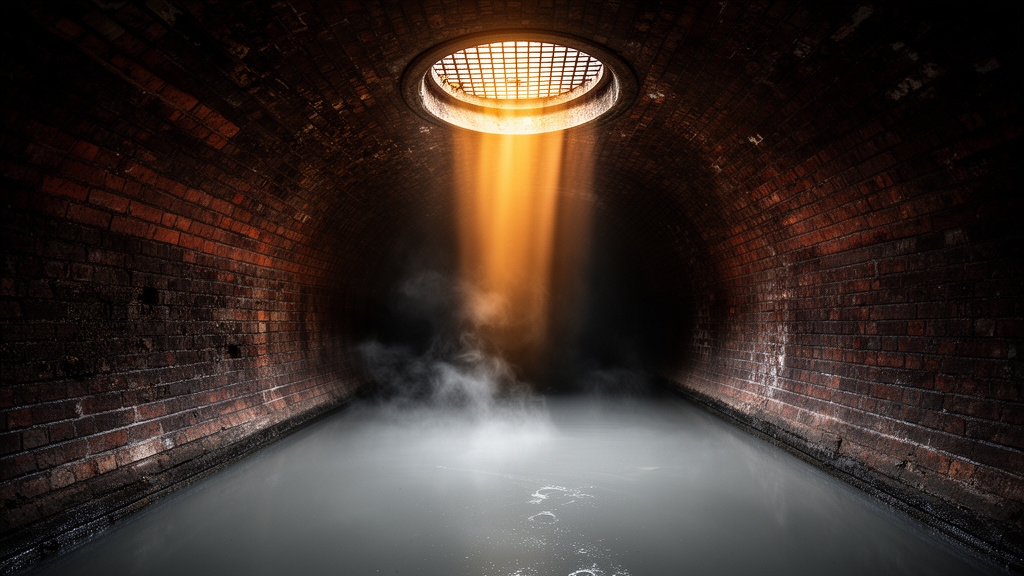
London is facing a crisis that echoes the darkest days of the 19th century as an unprecedented, record-breaking heatwave through the summer of 2026 has brought the city’s sewage network to a virtual standstill. The lack of rainfall has failed to flush the city’s expansive Victorian drainage pipes, resulting in a putrid stench settling over the capital and prompting urgent calls from municipal experts for a radical, immediate infrastructure overhaul that mimics the scale of the response to the original ‘Great Stink’ of 1858.
Key Highlights
- Stagnation Crisis: Persistent dry weather has caused a drop in hydraulic pressure, leading to waste accumulation within the network rather than the usual transit to treatment facilities.
- The 1858 Parallel: Infrastructure analysts are drawing direct comparisons to the 1858 Great Stink, which forced the creation of Sir Joseph Bazalgette’s revolutionary sewer system, arguing that modern climate change has rendered that system insufficient.
- Call for Reform: Engineers and urban planners are calling for a multi-billion pound, climate-resilient overhaul to handle the new reality of extreme, prolonged heat events in the UK.
The Infrastructure Catastrophe: A Network Pushed to Breaking Point
London’s drainage system, often hailed as an engineering marvel of the Victorian era, was designed for a specific set of environmental variables that simply no longer exist in the 2026 climate landscape. For over a century, the network has relied on a delicate balance of gravity and water flow to transport waste from households to treatment centers. However, this summer’s relentless heat, characterized by consecutive weeks of temperatures exceeding 34°C (93°F) and almost zero precipitation, has completely disrupted this equation. Without the consistent input of rainwater to ‘flush’ the system, solid waste is adhering to the brickwork of the intercepting sewers, creating pockets of putrefaction that are currently venting their odors up through the city’s manhole covers and street-level drains.
The Thermodynamics of Decay
The chemical process currently occurring beneath the streets of London is accelerating the odor production at an alarming rate. As sewage stagnates in the low-flow conditions, anaerobic bacteria are thriving in the extreme subterranean heat. The high temperatures are effectively fermenting the waste as it sits in the pipes, releasing concentrated hydrogen sulfide—the primary culprit behind the infamous ‘rotten egg’ smell. Unlike a typical summer, where localized rain showers provide a periodic clearing mechanism, the 2026 weather pattern has been relentless. The lack of moisture means that the sewers are losing their primary cleaning agent, turning the city’s underground veins into a sprawling, hot-weather incubator for odors that have begun to seep into basements, pubs, and restaurants across central London.
The Failure of the Victorian Legacy
It is an irony of urban history that the very infrastructure designed to solve the original Great Stink is now the primary point of failure. Sir Joseph Bazalgette’s mid-19th-century system was an engineering triumph of its time, utilizing gravity to move waste downstream from the growing metropolis. However, the system was never engineered to cope with a population of nine million people combined with 21st-century climate volatility. Critics of Thames Water and the Greater London Authority argue that the utility has been too slow to modernize. The current crisis highlights a systemic vulnerability: while the system is robust enough to handle the historic rainfall patterns of England, it is woefully ill-equipped to handle the prolonged droughts that now characterize the summer season.
Economic and Social Consequences
Beyond the visceral discomfort of the odor, the impact on London’s economy and social fabric is significant. In tourist hubs like Westminster and the City, the stench is reportedly deterring foot traffic, leading to a dip in outdoor hospitality revenue. For residents living in areas with older, un-ventilated systems, the smell has forced people to keep windows shut during the peak of a heatwave, worsening the indoor heat crisis. Public health officials are now monitoring the air quality in densely populated neighborhoods, fearing that the concentration of sewer gases could pose more than just an olfactory nuisance, potentially triggering respiratory distress for the elderly and vulnerable populations living in high-risk zones.
The Roadmap to Remediation
Experts gathered at an emergency summit in July 2026 have proposed a shift toward a ‘Smart Drainage’ model. This proposal involves installing active ventilation systems and high-pressure artificial flushing mechanisms that can be deployed during drought periods. The core of the recommendation is a departure from passive, gravity-fed systems to a climate-adaptive model. This would require substantial investment, likely running into the billions, and would necessitate a complete excavation of major arterial lines beneath the city center. While the cost is exorbitant, the consensus among urban planners is that the status quo is no longer an option. The 2026 Great Stink is not merely an environmental nuisance; it is a clear warning sign that the city’s bedrock infrastructure must evolve to survive the new, harsher climatic reality.
FAQ: People Also Ask
Q: Why is the smell happening specifically in 2026?
A: While the sewer system has aged, the specific trigger is the extreme, prolonged nature of the 2026 heatwave. The lack of rain (the primary ‘flushing’ mechanism for the sewer network) combined with sustained high temperatures has caused sewage to stagnate in pipes, leading to rapid fermentation and gas release.
Q: Is the smell dangerous to public health?
A: While largely an olfactory nuisance, high concentrations of hydrogen sulfide—the gas responsible for the rotten-egg smell—can cause headaches, nausea, and respiratory irritation. Public health officials are advising those in high-odor areas to keep windows closed and avoid prolonged exposure to street-level sewer vents.
Q: Will this lead to a complete overhaul of London’s sewers?
A: Engineering experts and government advisors are pushing for a total ‘Smart Drainage’ overhaul. The current crisis has provided the political and public mandate required to secure funding for the multi-billion pound infrastructure projects that were previously delayed by cost concerns.
Q: Can we just flush the sewers artificially?
A: Current infrastructure lacks the capability to flush the system without natural rainfall. Proposed solutions involve installing artificial, high-pressure water injection points specifically designed to clear stagnant sections during drought events, but these systems are currently in the planning or pilot phase.