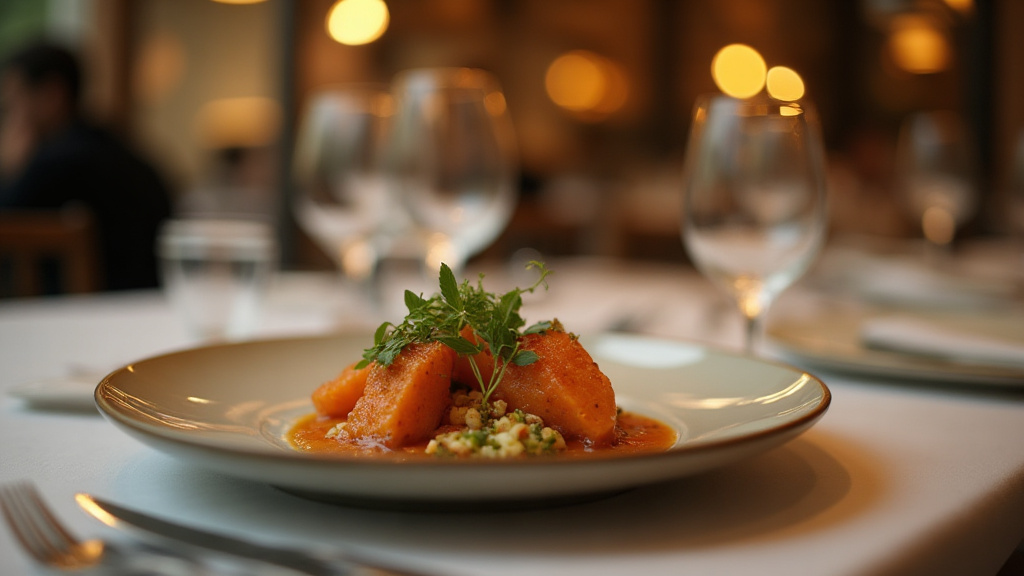
The Michelin Guide has officially expanded its Great Britain & Ireland selection for November 2026, unveiling 22 new restaurant additions. This latest update continues the organization’s strategic shift toward a more dynamic, monthly release schedule, keeping the culinary community and avid diners constantly updated on the most exciting gastronomic developments. While the list spans various regions, London stands at the forefront of this announcement, with high-profile openings like Oudh 1722, Carbone, and The Dover officially joining the guide’s curated selection of recommended establishments.
Key Highlights
- 22 New Additions: The November 2026 update encompasses 22 new establishments across Great Britain & Ireland.
- London’s Culinary Renaissance: High-profile London openings Oudh 1722, Carbone, and The Dover have secured their place in the guide.
- Dynamic Selection Process: These additions reflect the Michelin Guide’s commitment to highlighting quality dining throughout the year rather than relying solely on an annual publication.
- Diverse Gastronomy: The selection emphasizes a blend of international heritage—ranging from refined Indian Awadhi cuisine to Italian-American classics and modern British brasserie style.
The Michelin Pulse: Redefining Culinary Excellence in 2026
The Shift to a Monthly Reveal
For decades, the Michelin Guide was defined by the singular, anxiety-inducing day in which the annual “Red Book” would drop, determining the fates of chefs and restaurateurs for the following year. However, the 2026 edition marks the full maturity of the guide’s digital-first strategy: the monthly update. This shift is not merely a logistical change; it represents a fundamental evolution in how we view fine dining. By releasing additions throughout the year, Michelin maintains a pulse on the industry, allowing for more “of the moment” recognition.
This “always-on” approach benefits both the consumer and the industry. For the diner, it ensures that restaurant recommendations are current, reflecting the actual dining experience of today rather than twelve months ago. For the industry, it creates a sustainable rhythm of recognition, allowing new establishments to be validated shortly after opening their doors. The November 2026 additions are a testament to this, capturing a moment in time where London’s restaurant scene is undergoing a significant transformation, balancing heritage with modern, high-energy dining concepts.
London’s New Icons: Analysis of the Highlights
This month’s list is particularly notable for the calibre of the London entries. The guide’s inclusion of Oudh 1722, Carbone, and The Dover is a clear nod to the city’s ability to attract world-class culinary talent and investment.
Oudh 1722 brings a sophisticated lens to Awadhi cuisine, rooted in the culinary traditions of Lucknow, India. The inclusion in the Michelin Guide validates the shift towards regional specificity in Indian fine dining, moving away from generic curries toward precise, heritage-focused preparation. It’s an example of how the guide is prioritizing authenticity and technical skill over mere popularity.
Conversely, Carbone represents the powerhouse “glam-dining” trend that has dominated global hospitality. Originating in New York, its London outpost brings a high-octane, mid-century Italian-American aesthetic that appeals to a sophisticated, international crowd. Its inclusion signals that the Michelin inspectors are looking not just at the food on the plate, but the overall “theatre” of the dining experience—a crucial component of the modern restaurant economy.
The Dover, meanwhile, positions itself within the storied landscape of Mayfair. As a classic brasserie, it fills a specific void in the local market: high-quality, approachable, yet unmistakably upscale dining that fits the rhythm of business lunches and late-night dinners alike. By including The Dover, the guide reinforces its support for the “neighborhood institution” model, which remains the backbone of the British culinary scene.
The Economic and Cultural Impact of a “Michelin Mention”
What does it actually mean for a restaurant to be added to the guide, particularly in these mid-year updates? While these additions are not necessarily the “Stars” that garner headlines and awards ceremonies, being included in the Michelin Guide is a significant stamp of approval. It serves as a “seal of quality” that differentiates an establishment in an increasingly crowded market.
From an economic perspective, this inclusion acts as a powerful marketing engine. Tourism boards and travel guides frequently utilize the Michelin list to curate itineraries, meaning that even an “addition” status can drive a tangible increase in international reservations. Furthermore, for the restaurants themselves, this validation is a crucial milestone in their lifecycle, often serving as a precursor to future awards like the Bib Gourmand or a Michelin Star.
Examining the National Landscape
While London dominates the conversation in this November update, it is critical to look at the broader Great Britain & Ireland context. The Michelin Guide’s mandate is to explore the nuances of the British Isles, and while the capital city serves as the epicenter for new, flashy openings, the guide continues to shine a light on regional gems.
Recent data suggests that the geographic spread of high-quality dining is widening. Chefs are increasingly opting to open “destination” restaurants in market towns and rural areas, leveraging lower rents and access to hyper-local produce. While this November update focuses on major urban heavyweights, it invites us to consider the next phase of the guide’s growth: how will it continue to balance the massive, headline-grabbing openings in London against the quiet, persistent excellence of restaurants in the English countryside and the diverse culinary landscape of Ireland?
As we look toward the close of 2026, it is clear that the Michelin Guide is no longer just a static reference book. It has become a dynamic, living index of the evolution of food culture. Whether it is the bold flavors of Oudh 1722, the stylized nostalgia of Carbone, or the refined classicism of The Dover, these 22 additions prove that the appetite for exceptional dining—and the rigorous inspection of it—remains as intense as ever.
FAQ: People Also Ask
Q: Are these 22 restaurants receiving Michelin Stars?
A: Not necessarily. These restaurants are “additions” to the Michelin Guide. This usually serves as a “recommended” status, which is a prerequisite for potentially receiving a Bib Gourmand or a Michelin Star in future updates. It is a sign of high quality, but distinct from a Star.
Q: How often does the Michelin Guide update its selections?
A: The guide has transitioned to a digital-first, monthly update model. This allows for a more responsive guide that reflects the current state of the restaurant industry in real-time, rather than waiting for an annual release.
Q: What is the criteria for a restaurant to be added to the guide?
A: Michelin inspectors look at five specific criteria: the quality of the ingredients, the mastery of culinary techniques, the harmony of flavors, the personality of the chef as expressed in their cuisine, and the consistency across the entire menu and over time.
Q: Where can I see the full list of the 22 new additions?
A: The complete, updated list of the 22 restaurants added in November 2026 can be found on the official Michelin Guide website and their mobile application, which provides the most current, filterable database of the selection.