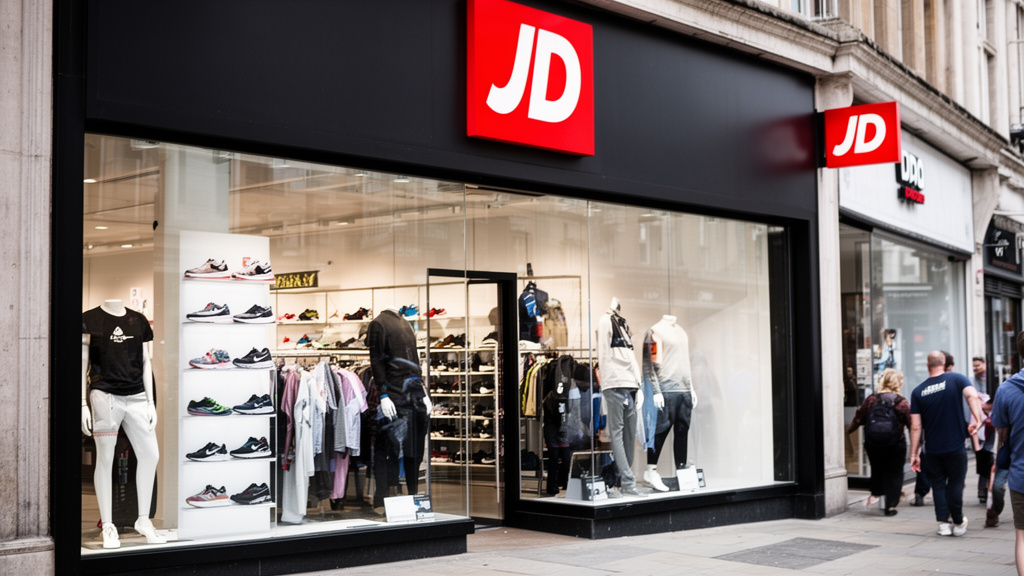
JD Sports Fashion has issued a sobering update for investors, lowering its adjusted pretax profit guidance for the 2027 fiscal year to a range between £700 million and £750 million. The sportswear retail giant pointed to a 2.6% decline in like-for-like UK sales, citing difficult macroeconomic conditions and unseasonably warm weather as key drivers behind the cooling demand for its core apparel and footwear offerings. This recalibration signals a challenging period for the “King of Trainers,” reflecting broader headwinds currently buffeting the UK high street and the global athleisure market.
Key Highlights
- Adjusted pretax profit guidance for 2027 has been narrowed to a range of £700m-£750m, down from previous investor expectations.
- UK like-for-like sales, a critical metric for retail health, retreated by 2.6% in the most recent quarter.
- Unseasonably warm weather conditions significantly hampered the sale of autumn/winter ranges, which typically carry higher margins.
- Broader market volatility and suppressed consumer discretionary spending continue to exert pressure on profitability across the sector.
Navigating the Retail Headwinds
The retail landscape, particularly for non-essential fashion and footwear, has proven notoriously difficult to navigate in recent months. For JD Sports Fashion PLC, a company long regarded as a bellwether for the health of the youth fashion and sportswear market, this downward revision is a stark reminder of the sensitivity of the sector to both climate and consumer confidence.
The Impact of Seasonality
One of the most immediate factors cited in the firm’s update is the weather. While it may seem counterintuitive to link meteorological patterns to stock market guidance, in the apparel industry, the timing of the seasons is paramount. The UK experienced a notably mild autumn and early winter, which delayed the cycle of consumer purchasing for high-value items such as winter coats, fleeces, and heavier footwear. Retailers rely on the shift in temperature to move high-margin seasonal inventory. When the cold weather fails to arrive on schedule, consumers hold onto their existing wardrobes longer, and the demand for new, season-appropriate stock dissipates. This creates a bottleneck in inventory, forcing retailers to rely on promotions and discounts to shift product—a dynamic that inevitably erodes profit margins.
Macroeconomic Pressures and Consumer Spending
Beyond the thermometer, the broader economic climate in the United Kingdom continues to weigh heavily on discretionary spending. With inflation having squeezed household budgets throughout the year, the “cost-of-living” crisis has forced many consumers to prioritize essential goods over luxury athleisure. The 2.6% decline in UK like-for-like sales suggests that the loyalty to top-tier trainer brands—long a stalwart of JD Sports’ success—is not immune to these financial pressures. As disposable income shrinks, the frequency of “impulse” purchases that fuel the trainer market has started to plateau.
Strategic Pivot and Operational Resilience
In response to these challenges, JD Sports is likely to sharpen its focus on operational efficiency. The company has historically been adept at managing its stock turnover and leveraging its relationships with global heavyweights like Nike and Adidas. The current strategy appears to be a defensive consolidation: tightening the guidance to set a realistic floor for investors, while focusing on maintaining market share in an increasingly competitive environment. This includes a more rigorous approach to inventory management to avoid being overstocked with unsellable seasonal items, as well as a strategic evaluation of its store footprint.
The Future of the Athleisure Market
Looking ahead, the question remains whether this is a temporary setback or the beginning of a structural shift in the retail sector. As JD Sports navigates the 2027 fiscal year, the company will need to balance the need to grow its international presence—where the brand remains a dominant force—with the volatility of its home market. Analysts are keenly watching how the firm manages its inventory and whether it can recapture the momentum that has historically defined its performance. The adjustment of guidance is, in many ways, an act of transparency intended to realign investor expectations with the current reality of the UK retail climate.
For investors, the key takeaway is that JD Sports remains a fundamentally strong operator in a challenging environment. The company’s ability to pivot its strategy in response to external factors like weather and economic downturns will be the ultimate test of its resilience. As it moves through the remainder of the fiscal year, the focus will be on the execution of its international strategy and the stabilization of its domestic sales, providing a blueprint for how legacy retailers must adapt to a more unpredictable, climate-sensitive, and economically cautious world.
FAQ: People Also Ask
1. Why did JD Sports lower its profit guidance?
JD Sports lowered its 2027 profit guidance to £700m-£750m primarily due to a 2.6% decline in like-for-like UK sales. This decline was driven by a combination of unseasonably warm weather, which hurt seasonal apparel sales, and a general tightening of consumer discretionary spending due to economic pressures.
2. What does ‘like-for-like sales’ mean in this context?
‘Like-for-like’ (LFL) sales is a crucial retail metric that compares the sales of existing stores over a specific period, excluding the impact of new store openings or closures. A decline of 2.6% indicates that the core business performance within established locations is shrinking compared to the previous period.
3. How does weather affect a sportswear company like JD Sports?
Weather is a significant factor for fashion retailers. A lack of cold weather during autumn and winter means consumers are less likely to purchase high-margin winter clothing like coats, hoodies, and heavy footwear. When this inventory sits unsold, retailers must offer deep discounts to move it, which negatively impacts overall profit margins.