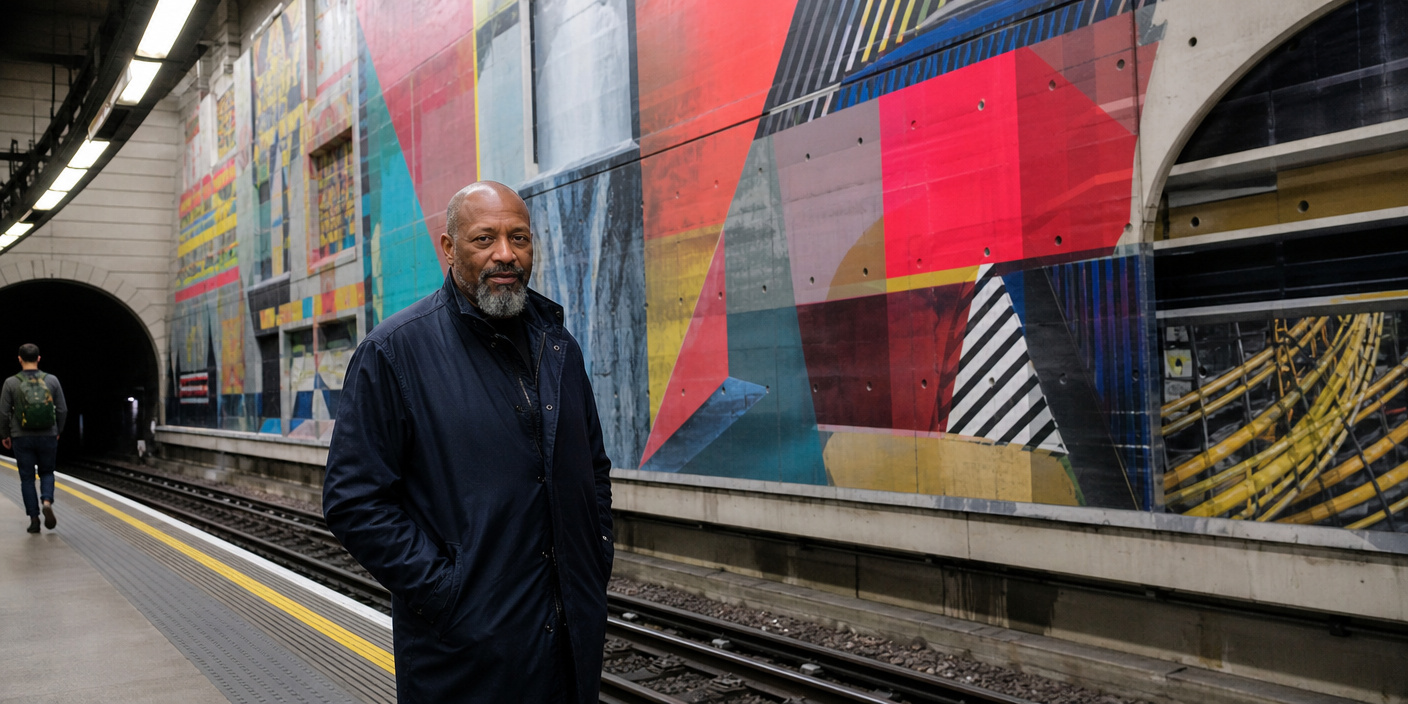
Hurvin Anderson has officially unveiled the 10th major mural commission at Brixton Underground station, marking a significant milestone for the Transport for London (TfL) ‘Art on the Underground’ programme. This installation, situated in the heart of Brixton—a location intrinsically tied to the history of the Windrush generation—serves as both a visual landmark and a poignant exploration of the Caribbean diaspora’s experience in London. By placing high-concept, contemporary fine art within a high-traffic transit hub, the project democratizes access to artistic discourse, inviting millions of commuters to engage with the complex narratives of migration, identity, and urban belonging.
Key Highlights
- Landmark 10th Commission: The mural represents the 10th significant Art on the Underground commission specifically for Brixton station, consolidating the station’s role as a vital cultural gallery.
- Windrush Narrative: The artwork draws deeply from the history of Windrush-era migration, exploring the Caribbean journey and the transformative influence this community has had on the capital.
- Artist Pedigree: Created by Hurvin Anderson, a Turner Prize-nominated painter, the work bridges the gap between traditional fine art and public infrastructure.
- Public Access: By installing the work within the station, the programme ensures that art remains an accessible, everyday experience for London’s diverse demographic, rather than a luxury reserved for galleries.
The Intersection of Memory and Movement
Public art in transit spaces serves a dual function: it provides aesthetic relief to the weary commuter while simultaneously acting as a historical anchor. In Brixton, where the history of post-war migration is inextricably linked to the bricks and mortar of the neighbourhood, Hurvin Anderson’s mural operates as a visual dialogue with the past.
Anderson, known for his masterful use of color, texture, and fragmented perspectives, uses the medium of the mural to explore the nuances of memory. For the Caribbean diaspora, the journey to London was not merely a physical displacement but a profound cultural translation. The mural captures this tension—the blending of tropical vibrancy with the distinctively cool, often somber tones of London’s urban landscape. This juxtaposition is vital. It reflects the reality of the Windrush generation: a constant negotiation between the ‘home’ left behind and the ‘home’ being built in a new, often challenging, environment.
Architectural Integration and Artistic Intent
One of the most complex challenges of public art is scale and physical context. Unlike a gallery painting, which is viewed in a controlled environment with specific lighting, a mural in a subway station must compete with signage, turnstiles, and the frantic pace of public life. Anderson’s work succeeds by utilizing the architecture of the station itself. The mural is not simply ‘placed’ on the wall; it engages with the station’s geometry. By integrating his signature painterly approach—often characterized by gridded structures or layering—the work feels like an extension of the station’s own brutalist, functionalist design.
The technical execution of this mural involves specialized materials designed to withstand the humidity and mechanical stress of a high-traffic Underground station, ensuring that the work remains a permanent feature rather than a temporary installation. This permanence is crucial. It signals to the public that the history of migration in Britain is not a transient footnote but a foundational pillar of the city’s identity.
The Evolution of ‘Art on the Underground’
Since its inception, the ‘Art on the Underground’ programme has transformed the transit system into a living exhibition space. By commissioning artists like Anderson, TfL is moving beyond decorative ‘beautification’ and toward meaningful cultural stewardship. The programme has facilitated installations that confront difficult histories, celebrate local identity, and push the boundaries of what public art can represent.
This 10th commission at Brixton is particularly significant because it reflects a maturation of the programme. It is no longer enough to display abstract shapes; the current mandate requires work that resonates with the specific ‘genius loci’ or spirit of the place. Brixton demands a narrative that is honest about the struggles of the past while celebrating the enduring resilience of its community. Anderson, with his deep personal and aesthetic connection to these themes, was an astute choice for such a high-profile commission.
Future Implications: Art as Urban Infrastructure
The success of this project raises broader questions about urban planning and social cohesion. As London continues to evolve, the integration of public art into transit infrastructure will likely become a blueprint for other global cities. This is not merely about aesthetic appeal; it is about social recognition. When public spaces acknowledge the history of the communities that inhabit them, it fosters a sense of belonging and ownership.
Looking ahead, we can expect to see further collaborations between major fine artists and transit authorities. This trend is driven by an economic reality as much as a social one; transit hubs that invest in cultural capital see higher levels of footfall and community engagement. However, the true value of the Anderson mural lies in the quiet moments of the commute: the split-second glance of a passenger catching a glimpse of their own history reflected in a mural, validating their experience within the grander story of the city.
FAQ: People Also Ask
1. Why is the Brixton station mural considered a ‘landmark’ commission?
It is the 10th such commission under the Art on the Underground banner, marking a decade-plus of dedicated artistic investment in one of London’s most culturally significant stations. It represents a long-term commitment to maintaining high-caliber public art in transit hubs.
2. What themes does Hurvin Anderson focus on in this mural?
Anderson’s work focuses on the Windrush-era migration, exploring the intersection of Caribbean heritage and the London experience. He examines themes of displacement, memory, and the blending of two distinct cultural environments.
3. Is this mural a permanent fixture?
Yes, the installation is designed to be a permanent or long-term fixture of the station environment, utilizing durable materials that can survive the rigorous conditions of an active Underground station, distinguishing it from temporary pop-up exhibits.
4. How does Art on the Underground select its artists?
Art on the Underground typically selects artists who have a strong conceptual link to the site or themes relevant to the local community. They prioritize artists who have a distinguished track record in the international art world, ensuring that the installations contribute meaningfully to the discourse of public art.