The new London Museum officially opens its doors to the public today, November 28, 2026, marking a monumental shift in the city’s cultural landscape. Situated within the magnificently restored Smithfield General Market, this £437 million redevelopment project serves as the successor to the original Museum of London at the Barbican, promising an immersive, state-of-the-art experience that bridges the capital’s ancient roots with its contemporary vibrancy.
- Launch Date: The museum officially opens its doors to the public on November 28, 2026.
- Financial Investment: A total of £437 million has been poured into the restoration and development of the site.
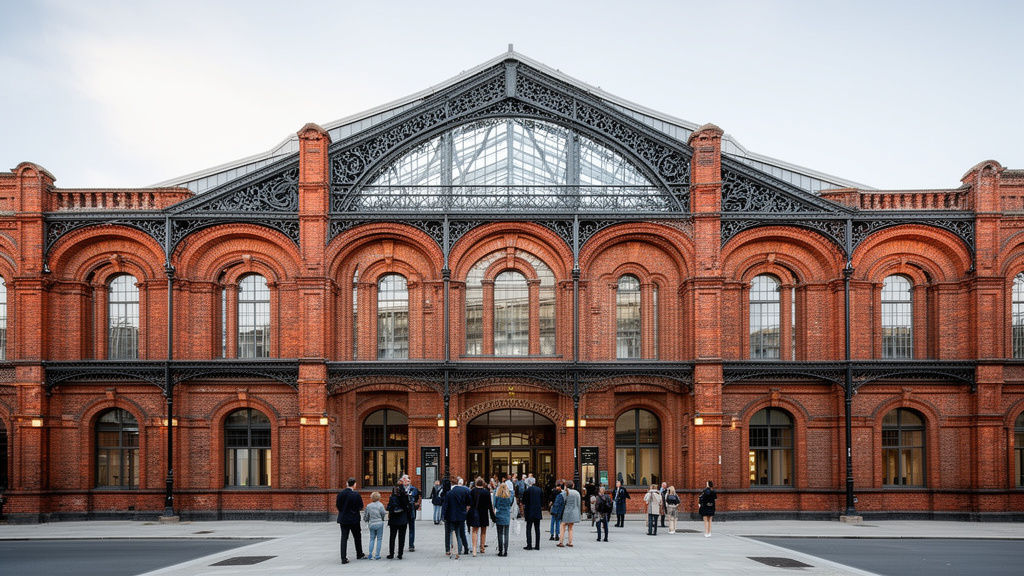
- Historic Location: The museum occupies the newly restored Smithfield General Market, a Victorian architectural gem.
- Core Galleries: The visitor experience is headlined by two major permanent galleries: ‘Our Time’ and ‘Past Time’.
- Accessibility: The museum introduces a new 24-hour café, catering to the city’s nocturnal and international rhythm.
A New Chapter for the Capital: The Migration from Barbican to Smithfield
The transition from the Museum of London’s long-standing home at the Barbican to the new flagship location at Smithfield represents more than just a change of address; it is a fundamental reimagining of how London tells its own story. The Barbican site, while iconic in its Brutalist grandeur, had reached the limits of its capacity and accessibility. The move to Smithfield General Market—a site steeped in centuries of trade, social interaction, and historical gravity—offers a space that is as much a part of the history being curated as the artifacts themselves.
This £437 million project has been meticulously designed to preserve the heritage of the Victorian-era market while integrating the complex technological and spatial requirements of a world-class museum. The revitalization of this area of London is expected to serve as a catalyst for economic growth in the district, reinforcing Smithfield’s role as a cornerstone of the capital’s central cultural and commercial life.
Architectural Mastery: Bridging Eras
The architectural team behind the project faced the immense challenge of retrofitting the ornate Victorian structures of the General Market without stripping away their character. By utilizing modern structural engineering, the team has created vast, column-free spaces that allow for expansive displays. The exterior, with its iconic red-brick and ironwork, has been sensitively restored, serving as a beacon of architectural preservation. The interior, however, is a masterclass in modern utility, utilizing industrial-grade lighting, sustainable climate control, and modular wall systems that allow the museum to rotate its vast collection with greater frequency than was possible at the Barbican.
Curatorial Vision: ‘Our Time’ and ‘Past Time’
The heart of the new London Museum lies in its two primary, distinct galleries: ‘Our Time’ and ‘Past Time’.
‘Past Time’ serves as the anchor for the museum’s immense archaeological collection. It explores the foundational layers of the city, from the Roman settlement of Londinium through the medieval era and the Victorian industrial revolution. The curation here uses haptic feedback and high-definition projections to make ancient relics feel immediate and relevant to the 21st-century visitor.
Conversely, ‘Our Time’ focuses on the living city. This gallery captures the essence of contemporary London—the social movements, the shifting demographics, the technology, and the global connectivity that defines the 2026 metropolis. It is an evolving, ‘living’ space that intends to update its exhibits in near real-time, inviting visitors to see their own lives as part of the historical narrative.
A 24-Hour Culture Hub
Perhaps the most radical departure from traditional museum models is the inclusion of a 24-hour café. In a city that never fully sleeps, this feature acknowledges that culture does not exist on a nine-to-five schedule. The café is designed as a ‘third space’ for the community—a spot for night shift workers, international travelers, and local residents alike. By keeping the doors open, the museum frames itself not merely as a repository for the past, but as a dynamic participant in the current life of the city.
FAQ: People Also Ask
Q: How does the new London Museum differ from the old Museum of London at the Barbican?
A: While the original Museum of London at the Barbican was housed in a Brutalist structure with distinct spatial limitations, the new site at Smithfield is a highly adaptable, restored historic space. The new facility is larger, technologically advanced, and designed to integrate more fluidly with the surrounding community, notably through its 24-hour accessibility.
Q: What are the main exhibitions available at the opening?
A: Visitors can explore two primary galleries: ‘Past Time’, which covers the archaeological history of London, and ‘Our Time’, a dynamic, contemporary gallery reflecting the current social and cultural makeup of the city.
Q: Is the 24-hour café open to everyone or only museum visitors?
A: The 24-hour café is accessible as a public community space, reinforcing the museum’s role as a 24-hour hub in the heart of Smithfield.
Q: What is the significance of the Smithfield location?
A: Smithfield General Market is a site of immense historical and architectural importance. Repurposing it as a museum allows for the preservation of a vital piece of Victorian history while placing the museum in a more central, accessible, and vibrant part of London.