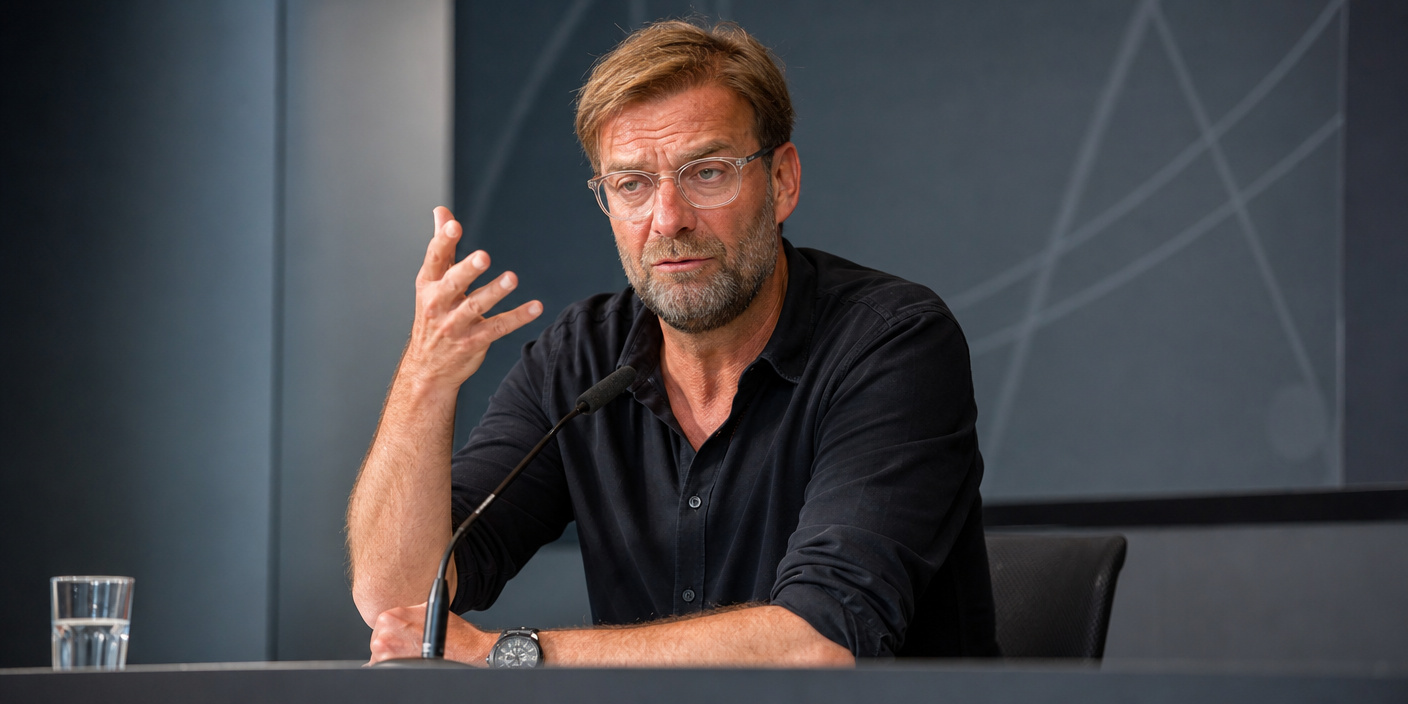
Jürgen Klopp has officially commenced his tenure as head coach of the German national soccer team, marking his first day at the German Football Association (DFB) headquarters in Frankfurt with a press conference that was as introspective as it was ambitious. While the footballing world had long anticipated this appointment, Klopp’s opening remarks—which included an unconventional, candid acknowledgment of the pressures that could lead a manager to resign—have dominated the immediate narrative, setting a high-stakes tone for his time with the squad.
The Frankfurt Presser: Ambition Meets Reality
The atmosphere at the DFB headquarters was electric, with international media congregating to witness the start of what many consider the most significant era in modern German football. Klopp, known for his charismatic yet demanding leadership style, did not shy away from the intensity of the job. In a refreshing break from the usual sanitized corporate rhetoric, he addressed the concept of resignation early. By framing the conversation around the necessity of total commitment and the emotional toll of the position, Klopp sent a clear signal to the DFB board: he will not sacrifice his principles or his mental well-being for the sake of political optics.
This approach has redefined the standard ‘first-day’ press conference. Instead of promising immediate silverware, Klopp focused on the sustainability of the project. He noted that the role of national coach requires a specific, draining level of focus that few can sustain long-term. By putting the potential for an early exit on the table, he is arguably insulating himself from the inevitable cycles of public criticism that follow every international manager, establishing that his tenure will be defined by his own terms, not by external pressure.
Tactical Evolution: The Gegenpressing Doctrine
The most pressing question for pundits and fans alike is how Klopp’s signature ‘Gegenpressing’—or counter-pressing—philosophy will translate to the international stage. Unlike at the club level, where Klopp had daily training sessions to drill his players, the international calendar allows only limited time for tactical cohesion. His philosophy relies on intense physical output and high-speed transitions, which may require a significant shift in how the German national team operates.
We expect to see an immediate emphasis on transitioning quickly from defense to attack. The DFB has long struggled with a ‘transition phase’ identity crisis, alternating between possession-heavy styles and more direct approaches. Klopp’s integration of younger talent from the Bundesliga will be critical. He has already hinted at a meritocratic selection process, prioritizing players who demonstrate the stamina required for his system. This tactical shift is not merely about formations; it is about changing the psychological tempo of the German squad.
A Nation’s Expectations: Balancing Legacy and Future
Germany’s recent tournament history has been one of fluctuation, with the 2014 World Cup victory feeling like an increasingly distant memory. Klopp enters this role with the weight of a nation that expects dominance but has become accustomed to early exits. He is inheriting a squad rich in technical quality but arguably lacking in the grit that defined the Klopp-led teams at Borussia Dortmund and Liverpool FC.
There is a historical context here that cannot be ignored. The German national team has historically favored managers who fit the ‘DFB mold’—methodical, structured, and diplomatic. Klopp represents a disruption to that mold. His ability to connect with the fanbase is unparalleled, acting as a bridge between the sterile environment of international football and the passionate, daily engagement of club support. If he can bridge this gap, he has the potential to revitalize the national pride that has waned over the last decade.
The DFB Strategic Pivot
The hiring of Klopp also signals a fundamental change in the DFB’s internal strategy. After years of internal turmoil and high-profile administrative changes, the organization appears to have prioritized footballing identity over administrative bureaucracy. By entrusting the team to a coach with the gravitas to demand changes to how the team travels, trains, and recovers, the DFB is essentially outsourcing its performance culture to Klopp.
This creates an interesting economic dynamic. The brand value of the German national team is directly tied to its performance. Following a period of relative stagnation, the commercial interest in the team had begun to plateau. Klopp’s arrival is a massive asset for the DFB’s commercial arm, likely boosting viewership, merchandise sales, and sponsorship interest ahead of upcoming major tournament cycles. However, this commercial windfall comes with the expectation of results. The financial security of the organization is now inextricably linked to the success of Klopp’s tactical experiment. He has been given the keys to the kingdom, and the expectations are, for the first time in a long while, firmly aligned with the reality of his salary and status.