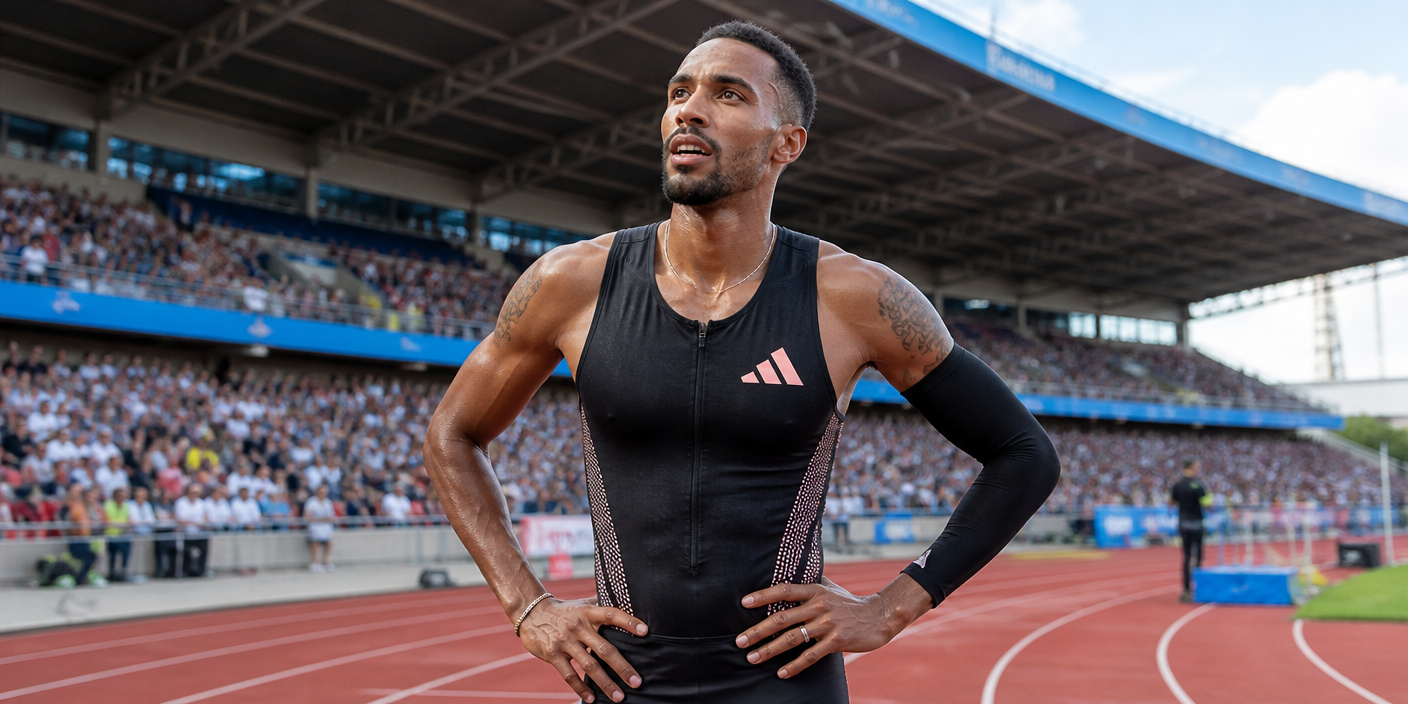
In a display of athletic poise and tactical brilliance, Matthew Hudson-Smith has cemented his legacy, clinching the gold medal in the men’s 400m at the 2026 European Athletics Championships held at the Alexander Stadium in Birmingham. The victory marks a significant milestone in his career, securing his third European title and reaffirming his status as a dominant force in continental sprinting. As the home crowd roared, Hudson-Smith navigated a challenging field, executing a race plan that balanced explosive power with seasoned discipline to overcome a late, aggressive surge from his Dutch and French competitors.
Key Highlights
- Historic Triple: Matthew Hudson-Smith officially secures his third European 400m title, marking a career-defining consistency at the continental level.
- Strategic Execution: The victory was defined by a calculated race pace, allowing the Briton to withstand a high-intensity final 100-meter challenge from continental challengers.
- Home Turf Dominance: The win at Alexander Stadium in Birmingham provides a landmark moment for British Athletics, showcasing the venue’s world-class facilities and the impact of a fervent home support system.
A Tactical Masterclass at Alexander Stadium
The 400m is often described as the most punishing event in athletics, a race that demands the aerobic capacity of a middle-distance runner and the explosive velocity of a sprinter. Matthew Hudson-Smith’s performance at the 2026 European Athletics Championships was a textbook execution of this delicate balance. From the gun, Hudson-Smith positioned himself with precision. Unlike previous years, where he might have relied solely on a late-race kick, this performance demonstrated a nuanced approach to energy distribution.
Controlling the Curve and the Straights
Analysis of the race reveals that Hudson-Smith’s transition from the back-stretch to the final bend was the deciding factor. By maintaining a controlled tempo in the first 200 meters, he preserved the physiological reserves necessary to manage the “oxygen debt” that typically cripples athletes in the final 50 meters. When the French and Dutch challengers initiated their move at the 300-meter mark, narrowing the gap with aggressive strides, Hudson-Smith did not panic. He exhibited a mature understanding of his own biomechanics, shifting gears with calculated efficiency rather than reactive desperation. This composure allowed him to maintain form—keeping his shoulders relaxed and stride frequency high—even as the physical intensity reached its peak.
The Impact of Home Advantage
The Alexander Stadium crowd played an intangible yet undeniable role. In elite athletics, the psychological lift provided by a home crowd can act as a catalyst for breaking through physical fatigue. For Hudson-Smith, competing at a venue where he has logged countless hours of training provided a unique sense of spatial familiarity. The crowd’s roar acted as a metronome, potentially aiding in his rhythm maintenance during the critical final straight. This victory is not merely a medal; it is a validation of the current British Athletics development infrastructure that utilizes the Birmingham facility as its high-performance hub.
Analyzing the Competition
The challenge posed by the Dutch and French contingents highlights the current depth of European 400m talent. The Dutch representative, known for a high-cadence start, pushed the pace early, testing the field’s ability to remain composed under pressure. The French competitor relied on a traditional stamina-heavy profile. Hudson-Smith’s victory underscores a shift in modern 400m racing: it is increasingly becoming a game of tactical awareness. The ability to read the race in real-time—knowing exactly when to expend energy and when to conserve—is now as vital as raw speed.
Secondary Angles: The Future of the 400m
1. Technological Integration in Training: This race highlights how athletes are increasingly utilizing wearable biometric tech to monitor lactate thresholds during high-intensity training. Hudson-Smith’s perfectly timed energy usage suggests an analytical approach to race pacing that is becoming the standard for podium-level athletes.
2. The Economics of Elite Hosting: The success of the 2026 Championships at Alexander Stadium reinforces the UK’s strategy to position Birmingham as the premier destination for international track and field. The economic ripple effects—from local hospitality boosts to the rejuvenation of sporting infrastructure—provide a blueprint for future host cities.
3. Longevity in Sprinting: Securing a third title in such a demanding event raises questions about the longevity of elite 400m runners. Historically, many athletes burn out or suffer injury within a four-year cycle. Hudson-Smith’s sustained success points to a paradigm shift in injury prevention, recovery protocols, and training periodization that is extending the peak competitive window for modern sprinters.
FAQ: People Also Ask
Q: How does this third title compare to Hudson-Smith’s previous European wins?
A: This victory is arguably the most significant, given the elevated level of competition from emerging Dutch and French talent and the immense pressure of defending a title on home soil at Alexander Stadium.
Q: What makes the 400m event so tactically complex?
A: The 400m requires athletes to balance anaerobic output with aerobic capacity. Running too fast too early leads to a catastrophic buildup of lactic acid, while running too slowly leaves the athlete vulnerable to late-race surges. It is essentially a game of managed fatigue.
Q: Will this victory impact his qualification or seeding for future global events?
A: Yes, holding a European title significantly boosts an athlete’s international ranking and seeding points, which is crucial for favorable lane assignments in upcoming World Championships and the next Olympic cycle.
Q: Why was the Birmingham crowd considered a factor in the race?
A: The psychological phenomenon of “home field advantage” in athletics can manifest as reduced perception of exertion. The vocal support from the home crowd can provide a crucial surge of adrenaline that helps athletes maintain their form during the final, most grueling phase of the race.