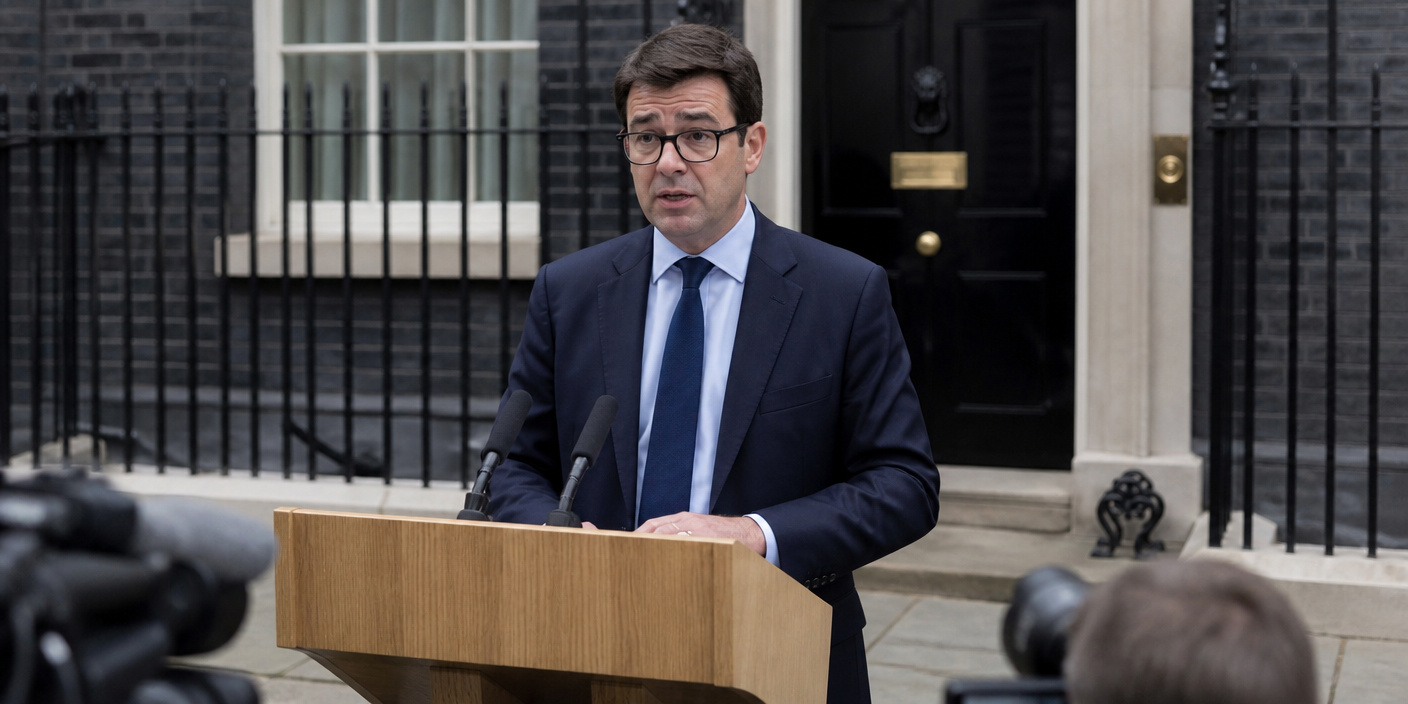
In a concerning security incident involving high-level government communications, UK Prime Minister Andy Burnham was targeted by an individual posing as Susie Wiles, the chief of staff for U.S. President-elect Donald Trump. The attempted breach, which involved an unsolicited communication, has prompted an immediate review of security protocols surrounding the Prime Minister’s direct channels, though officials confirm that no significant or sensitive state information was exchanged during the interaction. The incident underscores the increasing vulnerability of high-ranking political figures to advanced social engineering tactics.
Key Highlights
- Incident Identified: Prime Minister Andy Burnham was targeted in a security incident involving an individual impersonating Susie Wiles.
- Breach Status: Officials confirmed that no sensitive or classified information was compromised during the attempted communication.
- Regulatory Response: The matter has been officially reported to the relevant security and intelligence authorities for a full investigation.
- Security Protocol: The event has triggered a mandatory audit of contact security for the Prime Minister’s office to prevent future impersonation risks.
The Anatomy of the Digital Impersonation Attempt
The attempted communication targeting Prime Minister Andy Burnham represents a concerning evolution in the landscape of high-level political social engineering. While the specific methodology used by the individual claiming to be Susie Wiles remains under strict investigation, security analysts suggest these incidents often rely on a combination of ‘spoofing’ and deep-rooted research into the target’s public and private schedules. By impersonating a figure as high-profile as the chief of staff to a sitting U.S. President, the perpetrator aimed to leverage the urgency and perceived legitimacy required to bypass standard office vetting procedures.
In this instance, the Prime Minister’s office demonstrated adherence to internal security protocols, recognizing discrepancies in the communication early enough to prevent any meaningful exchange of intelligence. Unlike traditional phishing—which often involves mass-distributed emails or generic links—this incident falls under the category of ‘spear-phishing’ or ‘whaling,’ a highly targeted form of deception aimed at the most influential individuals in the nation. The incident has not only highlighted the resilience of the Prime Minister’s current support staff but has also served as a stark warning to the wider political establishment regarding the sophistication of contemporary threat actors.
The Strategic Value of Impersonation
Why target the Prime Minister with a fake identity? Experts in digital warfare argue that such attempts are rarely about direct theft of data alone. Rather, they are often designed to test the responsiveness, verification hurdles, and communication habits of national leaders. Even a failed attempt provides an adversary with a data point on how the target and their office respond to unexpected high-level inquiries. By assuming the persona of Susie Wiles—a key operative in the U.S. political sphere—the perpetrator utilized the current high-stakes geopolitical climate to create a false sense of urgency, pressuring officials to act before the standard vetting, or ‘backchannel’ verification, could occur.
Evolving Threats: The Role of AI and Advanced Social Engineering
While this specific incident did not utilize deepfake audio or video, as far as has been disclosed, the rise of synthetic media is drastically changing the defensive needs of world leaders. We are entering an era where voice cloning and real-time generative responses could make similar attempts far more convincing. Prime Minister Burnham’s office is now tasked with upgrading security frameworks that were built for an era of physical letters and verified diplomatic cables, adapting them for a 24/7 digital connectivity model. This involves more stringent multi-factor authentication for communication channels and a ‘zero-trust’ policy regarding inbound requests, regardless of the claimed identity.
Future Implications for Global Political Communication
This event is likely to catalyze a broader, international conversation among G7 and allied nations regarding the security of direct line communications. As political systems become more interconnected, the expectation for rapid response times often conflicts with the necessity for caution. Moving forward, we expect to see an increase in the adoption of ‘out-of-band’ verification methods—where the identity of a caller is confirmed through a completely separate, pre-established secure channel before any substantive conversation takes place.
Furthermore, the incident raises questions about the security of private aides and staff members. If a perpetrator cannot get to the Prime Minister directly, they may attempt to compromise the peripheral figures around him to gain entry to the inner circle. This ‘perimeter defense’ approach must now be applied to every individual in the Prime Minister’s orbit, treating every advisor, administrative assistant, and aide as a potential vector for a wider breach. As the investigation into the impersonator continues, the UK government is expected to release guidance to its senior members on identifying and mitigating these sophisticated social engineering attempts. The priority remains clear: protecting the integrity of the Prime Minister’s communication stream without stifling the diplomatic agility required in modern statecraft.
FAQ: People Also Ask
Was any sensitive state information compromised?
No. Government sources have confirmed that the impersonation attempt was identified and neutralized before any substantive or sensitive information could be exchanged.
Who is Susie Wiles, and why was she impersonated?
Susie Wiles is a high-profile political strategist and the chief of staff for U.S. President-elect Donald Trump. Her position makes her an ideal, albeit difficult, persona for impersonators looking to gain access to high-level international contacts due to the inherent trust and urgency associated with her role.
Is there an ongoing investigation into the impersonator?
Yes. The incident has been formally reported to the appropriate security authorities, who are currently investigating the source of the communication and the perpetrator’s methods.
How can government officials prevent future impersonation?
Officials are being encouraged to implement strict out-of-band verification processes, where the identity of any high-profile contact is verified through secondary, authenticated channels before a phone call or meeting is accepted.